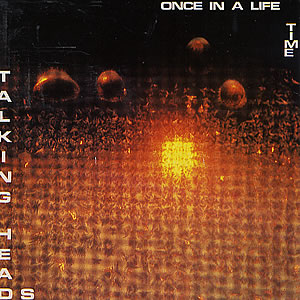
The band nearly threw the song away. The producer misheard the beat and never stopped mishearing it. The lyrics were built from Pentecostal preachers taped off a car radio in the American South. And the whole thing was assembled backward, from a formless jam sliced apart and looped, by a group that would end up fighting for years over who actually wrote it. Talking Heads and Brian Eno have told the story of "Once in a Lifetime" for four decades, and the more they tell it, the messier and better it gets.
"Once in a Lifetime" was built in 1980 from a studio jam for the album Remain in Light, credited to David Byrne, Brian Eno, and Talking Heads. Byrne wrote the verses in a radio-preacher cadence after listening to evangelists; Eno wrote the wordless chorus melody. The band nearly abandoned it. It never reached the US Hot 100, peaking at number 103, yet became one of the most enduring songs of the decade.
A song assembled backward from a jam
Nothing about "Once in a Lifetime" started as a song. It started as noise the band learned to sculpt. "Most of the tracks on Remain In Light were based around jams," Byrne told Uncut in 2007. "We'd listen to the tapes, isolate the best bits, then learn how to play them over and over again." His summary of the method is the line everyone remembers: "We were human samplers!"
Tina Weymouth's bass held the whole thing down, and she is blunt about how unglamorous it was. "Encouraged by Chris, I came up with the bassline," she told Uncut in 2007. It was, in her words, "a really dumb bass part, but I had to leave lots of space for the cacophony that surrounded me." Chris Frantz described the goal from the drum stool: "What we were going for was a 'rhythm bed', something to be expanded upon later on," he told Uncut in 2007.
The song they almost cut
For a while, nobody was sure it was worth keeping. Eno did not love it, and the band came close to dropping it entirely. Byrne is the one who forced it to survive. "We very nearly abandoned the song," he told Uncut in 2007. "I insisted that I could write words to it and pull it together." The turn came when Eno found the hook. As Byrne tells it, "Then Eno had an idea for a melody for the chorus, and it fell into place." Eno confirms the chorus was his: "The idea for the chorus melody was mine," he told Uncut in 2007, describing how he started "singing a wordless riff over the top of the bassline." He is equally clear about where the credit stops. "But the lyrics were all David's."
The preacher in the words
The verses came from the radio. While the tracks sat waiting for words, Byrne took a drive and turned the dial. Frantz laid out the trip in a 2024 American Songwriter interview: "According to legend, and I believe it's true, he rented a car and basically drove around the American South and listened to Pentecostal preachers on the radio ... That type of preaching and messaging was the big inspiration for his lyrics on 'Once In A Lifetime.'"
Byrne built the vocal to match. "It worked as a call-and-response pattern, like a preacher's conversation with his congregation," he told Uncut in 2007. "I improvised lines as if I was giving a sermon." Eno heard the tension that made it work: Byrne was using "that blood-and-thunder intonation of the preacher, but his words are terribly optimistic," Eno told Uncut in 2007. The evangelist tapes were an offshoot of the field recordings the two men had been collecting for their side project My Life in the Bush of Ghosts, which is why the sermon feel arrived fully formed.
The beat two people never agreed on
Here is the detail that explains why the record feels like it is floating. Eno and the rest of the band do not hear the downbeat in the same place, and they never have. "The first time I heard that jam session, I misheard the riff," Eno told Uncut in 2007. "I always think that the 'one' of the bar is in a different place to where the rest of the band thought the 'one' was. So I counted 'one-two-three-four' differently to them." He does not treat it as a mistake he fixed. He calls it the engine of the track: the song has "two centres of gravity," he said, "their funk groove, and my dubby, reggae-ish understanding of it," the way a Fela Kuti record layers rhythms that warp in and out of each other.
That disagreement got physical over Weymouth's bass. "Brian and I had a dispute over the bassline," she told Uncut in 2007. "He wanted me to drop out on the crucial 'one' beat. He thought it was too 'obvious'. He even re-recorded my bass." Her part won in the end, but only by accident of geography. "It was only when we were back in New York, when Brian had gone home, that the engineer asked me to get it locked in and get it to groove again." She is careful not to inflate it: "It wasn't a big fight between me and Brian, as it has sometimes been portrayed, it was just a musical dispute."
What the song is actually about
Critics decided "Once in a Lifetime" was a satire of yuppie greed, a smirk at the man with the beautiful house who wonders how he got it. Byrne has spent decades saying no. "We're largely unconscious," he told NPR in 2000. "You know, we operate half awake or on autopilot and end up, whatever, with a house and family and job and everything else, and we haven't really stopped to ask ourselves, 'How did I get here?'" He put it more plainly to Uncut in 2007: "It's about the unconscious. It's about how we operate half awake, on autopilot." The repeated line "same as it ever was" is the water at the bottom of the ocean, life carrying you along whether you are paying attention or not.
How the telling has grown over the decades
The story arrived in pieces, from different mouths, across a quarter century. In 2000, NPR got the clean version of the meaning from Byrne: autopilot, not satire. The richest telling is the 2007 Uncut oral history, where all four members and Eno speak in turn, and the seams start to show. Byrne owns the near-abandonment and the sermon cadence. Eno owns the chorus melody and the misheard beat. Weymouth owns the bassline and the dispute over it. Frantz owns the rhythm bed and remembers that "David disappeared for about two months to write the lyrics." In 2024, American Songwriter added Frantz's memory of the road trip through the South that fed the words.
The drift is real, and it is worth naming rather than smoothing. The credits are the sore spot. The Fact File on the song lists it as written by David Byrne, Brian Eno, and Talking Heads, but it was, as Weymouth notes, "initially credited to just Byrne and Eno." When the band learned two names were going on a song five people built, it stung. They "found out that [Brian and David] wanted to co-opt the song-writing credits for the album," Weymouth told Uncut in 2007, and "that was a real surprise." Her verdict on the music never wavers. "It really was a jointly written enterprise." The other permanent discrepancy is not a dispute at all but a fact of the recording: Eno still counts the "one" in a different place from everyone else, and that mismatch is fused into the master.
The honest bottom line
Strip away the reputation and "Once in a Lifetime" is a song nobody planned, nearly deleted, argued over, and watched miss the charts. It never cracked the Billboard Hot 100 on release, stalling at number 103 on the Bubbling Under chart, and only limped to number 91 years later when the live Stop Making Sense version was issued in 1986. The UK gave it a number 14 and, eventually, platinum. None of that is why it lasted. It lasted because a mistake, Eno's misheard beat, and a road trip, Byrne's preachers, collided over a bassline Weymouth thought was dumb, and the accident held. Six years later, Paul Simon would push the same instinct further with You Can Call Me Al, dropping a confused New Yorker into an African groove and accidentally making a pop hit. An all-80s radio stream from the Bubble is coming, and songs like this are the reason the decade still gets revisited at all.
FAQ
What is the story behind "Once in a Lifetime" by Talking Heads? The song grew out of a 1980 studio jam for Remain in Light that the band nearly abandoned. Byrne insisted he could write words for it, Eno supplied the wordless chorus melody, and Byrne wrote the verses in the cadence of Pentecostal radio preachers. It was credited to Byrne, Eno, and Talking Heads.
Who wrote "Once in a Lifetime"? David Byrne wrote the verses and lyrics, Brian Eno wrote the chorus melody, and the instrumental groove came from the whole band, with Tina Weymouth's bassline anchoring it. The song was first credited to just Byrne and Eno, which Weymouth has said was a surprise to the rest of the band.
What does "same as it ever was" mean? Byrne has said the song is about living on autopilot, ending up with a house, a family, and a job without ever stopping to ask how you got there. "Same as it ever was" is the current of ordinary life carrying you along, the water at the bottom of the ocean that never stops moving.
Was "Once in a Lifetime" a hit when it came out? No. On its 1981 release it never entered the US Billboard Hot 100, peaking at number 103 on the Bubbling Under chart. It reached number 14 in the UK. A live version from Stop Making Sense reached number 91 on the US Hot 100 in 1986. Its fame came from the video, radio, and time, not chart position.
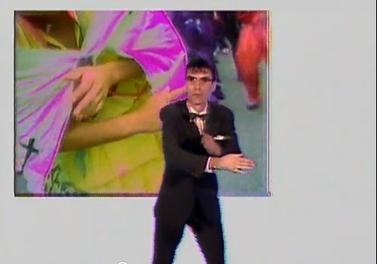
Why does David Byrne dance like that in the video? The jerky, preacher-in-a-trance movements were built from documentary footage of evangelists, people in trances, and religious rituals that Byrne and choreographer Toni Basil studied. The physical performance mirrors the sermon delivery of the lyrics.
Sources
- Uncut, "The Making of Once In A Lifetime by Talking Heads," oral history with David Byrne, Brian Eno, Tina Weymouth, Chris Frantz, and Toni Basil, November 2007 (archived at moredarkthanshark.org)
- NPR, "Present at the Creation: Once in a Lifetime," March 27, 2000
- American Songwriter, "The Meaning Behind Once in a Lifetime by Talking Heads," Jim Beviglia (quoting his interview with Chris Frantz for the book Playing Back the '80s), February 27, 2024
- Songfacts, "Once In A Lifetime by Talking Heads"
- Wikipedia, "Once in a Lifetime (Talking Heads song)," chart and certification tables citing Billboard and the Official Charts Company
- Billboard Hot 100, week of May 3, 1986 (live version at number 91)
Same as it ever was: checked, sourced, told right.
Part of Stories Behind the Songs. See also Whip It and Blue Monday.