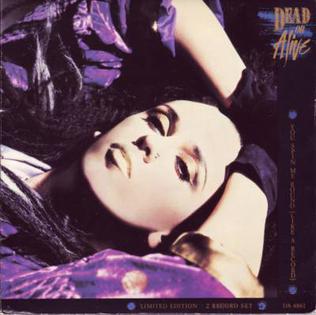
The band's own label called it awful. The singer borrowed money to record it. The session it was made in was not the session anyone had approved, and the bassline everybody recognizes is not a bass. Then it took seventeen weeks to crawl to number one in Britain, and it made a production trio famous enough to run the back half of the decade. Pete Burns died in 2016, but he wrote his version down first, and the producer who was in the room has never stopped telling his.
"You Spin Me Round (Like a Record)" was written by Dead or Alive and built by Pete Burns out of two records he sang new melodies over: Luther Vandross's "I Wanted Your Love" and Little Nell's "See You 'Round Like a Record." Stock Aitken Waterman recorded it in secret in 1984 during sessions booked for other songs. It reached number one in the UK on March 9, 1985 and number 11 in the US.
How Burns says he actually wrote it
Burns explained his method in his 2007 autobiography Freak Unique, and it is not the method most songwriters describe. He did not sample and he did not borrow chords. He sang over other people's records until something new stuck.
"I listened to Luther Vandross's 'I Wanted Your Love'. It's not the same chord structure, but then that's the way I make music," he wrote. "I hear something and I sing another tune over it."
He was blunt that this was not study. "I didn't sit and study the Luther Vandross album." What happened was faster and dumber than that: "I heard the song and it locked."
He described the process as a kind of stacking, and he was unbothered about where the pieces came from. "I don't want to do Luther Vandross's song, but I can still sing the same pattern over it." The second ingredient was a 1970s record by Little Nell, the actress who played Columbia in "The Rocky Horror Picture Show," called "See You 'Round Like a Record." Burns had his two sources and the title practically wrote itself. His own summary of the outcome: "bingo!"
The finished single is credited to Burns and his bandmates Steve Coy, Wayne Hussey, Tim Lever and Mike Percy.
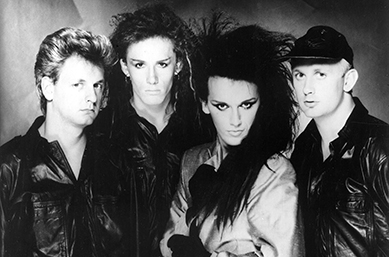
The label said it was awful
Epic did not want the record. Burns said the company's reaction after hearing it was flat: "the record company said it was awful."
By Burns's account he took out a loan of £2,500 to get the song recorded at all, and the band paid to make the video themselves. He also disputed the idea that the producers made the record for him, saying the song was "completed" before they got involved, and putting the arrangement down to industry habit: "the record companies don't trust a band to go into the studio without a producer."
The session that was not supposed to happen
Pete Waterman's version fills in everything Burns's does not, and he has told it consistently. He first saw Burns on Top of the Pops and was, in his word, "smitten." Burns later called asking for a meeting.
"He played me three songs which in truth weren't the greatest songs he played us. But I desperately wanted to work with him," Waterman told Newsweek in 2016, days after Burns died.
Dead or Alive's label disliked the pairing and eventually approved three specific songs on a minimal budget. Then, in a London studio in 1984, Burns changed the plan.
"Before we started, Pete said: 'Can I play you this song we rehearsed at the weekend?'" Waterman recalled. "It was 'Spin Me Round.' I said: 'Let's forget the others, let's do this.'"
There was no permission and no money for it. "We didn't have the budget and we certainly didn't have the permission of the record company to do it," Waterman said. "I had to work out how we could start the other three songs, to show the company we started them, and put all our efforts into 'Spin Me Round.' That was the one that was different, that was the one that was the hit."
Fourteen days, and everyone wanted to kill each other
The sessions went badly. Waterman's description of the end of them is the most quoted line in the whole story: "By the 14th day, Pete Burns was ready to murder Mike and Matt, Mike and Matt are ready to murder Pete and the band, nobody's talking to one another." His solution was to clear the building. "I sent everybody home."
Waterman and engineer Phil Harding then stayed up all night mixing. Burns walked in the next morning to a finished record. "He was like a little boy, he went barmy, he loved it," Waterman said.
Burns confirmed the atmosphere from his side. Interviewed for BBC Radio 4's "The Reunion: The Hit Factory" in April 2015, he described "quite a bad vibe" during the production and called it "a time of intense friction."
Not everyone signs off on how dramatic it has become. Mike Stock has disputed the seriousness of the studio tension, saying Burns, Harding and Waterman have all "exaggerated" what happened in their accounts. Matt Aitken has confirmed tensions were high, with the producers clashing with the band over how much the band wanted to keep piling onto the mix. So the participants agree it was bad and disagree about how bad, which is exactly what you would expect from four people remembering a fight thirty years later.
The bassline is not a bass
The sound of the record was a deliberate act of vandalism against normal instruments.
"The bassline took like four days to record. There were no computers in those days. We did everything by hand," Waterman told Newsweek. "We knew from day one we wanted to break every rule. We didn't want the instruments to sound like instruments at all."
Then the detail that makes musicians sit up: "The bass is not a real bass at all." Waterman says it came from "a sound that Matt Aitken made up from steel girders being hit with a hammer."
Burns and Waterman never fully agreed on what genre they had made. Waterman has called it "techno-disco" and described it as "new technology playing Motown," adding: "Taking out the musicians and bringing in technology for the first time." Burns rejected the hi-NRG label the record usually gets filed under, saying in a 2009 interview that "to me it was just disco," calling it "a pop hit, not a hi-NRG hit," and citing Sylvester as a major influence. He said he had wanted to make a "glittery disco record."
What the charts actually did
Nothing about this record was quick. The Official Charts Company's weekly tables show it entering the UK chart on November 17, 1984 and grinding upward for months. It reached number one on the chart dated March 9, 1985, held for a second week on March 16, and then fell off a cliff, dropping to number 6, then 12, then 20 in the three weeks after. Twenty five weeks on the chart in that run.
America took even longer to notice. It entered the Billboard Hot 100 dated June 1, 1985 at number 88 and peaked at number 11 on the chart dated August 17, 1985, its highest US position. Tears for Fears' "Shout" was the number one song in America that week.
It was the first UK number one for Stock Aitken Waterman. Everything the Hit Factory did afterward, Bananarama, Kylie Minogue, Rick Astley, sits on top of this record.
How the telling has grown over the decades
2007, Freak Unique: Burns puts his songwriting method on paper. The Vandross record, the Little Nell record, the loan, the label calling it awful, and his claim that the song was finished before the producers arrived.
2009 interview: Burns argues with the genre label the record has been given, insisting it was disco and a pop hit rather than hi-NRG, and names Sylvester as an influence.
April 2015, BBC Radio 4, "The Reunion: The Hit Factory": Burns and the SAW camp are in the same conversation. Burns describes "quite a bad vibe" and "a time of intense friction," which is the closest he came to confirming Waterman's murder line.
October 2016, Newsweek (Tufayel Ahmed): Published days after Burns's death, this is Waterman's fullest telling: the secret recording, the fourteen days, sending everyone home, the all-night mix, and the steel girder bassline.
The drift is a disagreement about credit and about how ugly it got. Burns's version centers the writing and downplays the producers. Waterman's version centers the production and the risk he took hiding it from the label. Both are consistent with the same facts. Mike Stock's contribution is to say everyone else has told it too big. With Burns gone since 2016, his side of it is fixed in what he wrote and said while he was alive, and it is worth reading it in his words rather than through the people who outlived him.
The honest bottom line
"You Spin Me Round" is a song Burns built by singing over two other people's records, made behind a label's back, on borrowed money, by a band and a production team who could barely stand each other by the end. Its most famous instrument does not exist. It is also one of the most physically effective pop records ever made in Britain, and it created the machine that produced half the hits of the late 80s. Nothing about how it was made was noble, and none of that is audible for even a second when the intro starts.
FAQ
Who wrote "You Spin Me Round (Like a Record)"? It is credited to Dead or Alive members Pete Burns, Steve Coy, Wayne Hussey, Tim Lever and Mike Percy. Burns wrote that he built it by singing new melodies over Luther Vandross's "I Wanted Your Love" and a record by Little Nell called "See You 'Round Like a Record."
What is the story behind "You Spin Me Round"? Dead or Alive's label approved three other songs and a tiny budget for sessions with Stock Aitken Waterman in 1984. Burns played the producers "You Spin Me Round" instead, and Pete Waterman secretly redirected the sessions to record it without the label's permission.
Is the bassline on "You Spin Me Round" a real bass? No. Pete Waterman has said "the bass is not a real bass at all," describing it as a sound Matt Aitken built from steel girders being hit with a hammer. It took about four days to record, by hand, with no computers.
Did "You Spin Me Round" go to number one? In the UK, yes. It reached number one on the chart dated March 9, 1985, seventeen weeks after entering, and held for two weeks. In the United States it peaked at number 11 on the Billboard Hot 100 on August 17, 1985.
Was "You Spin Me Round" the first Stock Aitken Waterman number one? Yes. It was the trio's first UK number one, before their work with Bananarama, Kylie Minogue and Rick Astley.
Did Pete Burns like the finished record? By Waterman's account, yes, immediately. Burns arrived the morning after an all-night mix and, in Waterman's words, "he was like a little boy, he went barmy, he loved it." Burns was less generous about the process, describing intense friction during the sessions.
Sources
- Pete Burns, "Freak Unique: My Autobiography," John Blake Publishing, 2007, pages 95 to 97, block quotation as reproduced in the Wikipedia entry for the song
- Newsweek, "Pete Burns: How 'You Spin Me Round' Went from Being Recorded in Secret to a Number One Hit," Tufayel Ahmed, October 25, 2016, interview with Pete Waterman
- Wikipedia entry for "You Spin Me Round (Like a Record)," for Burns's 2009 interview remarks, his BBC Radio 4 "The Reunion: The Hit Factory" remarks from April 2015, and the Stock and Aitken responses, each cited there to its original source
- The Guardian, "The 100 greatest UK No 1s, No 5," Ben Beaumont-Thomas, June 1, 2020
- Official Charts Company weekly UK chart run for the single, November 1984 to May 1985
- Billboard Hot 100 weekly chart dated August 17, 1985
You spin me right round, the facts stay still.
Part of Stories Behind the Songs. See also Never Gonna Give You Up and Relax.