A 22-year-old wrote a soul ballad to a woman who did not love him back, hid her name inside it with lines lifted from a novel she had given him, and then watched it go to number one in twenty-one countries while she went on with her life. For years he would only admit it was about "a singer." Eventually he named her: Clare Grogan, the star of Gregory's Girl and the voice of Altered Images. Gary Kemp has been decoding his own most famous song for four decades, and the secret buried in "True" is that the whole thing is a love letter that was never actually sent.
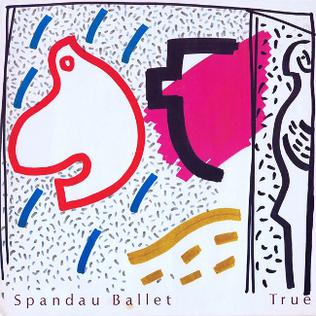
"True" was written by Spandau Ballet's Gary Kemp in 1982, when he was 22, about his unrequited crush on Altered Images singer Clare Grogan. Aiming for a Marvin Gaye or Al Green style soul song, he wrote it on guitar in his parents' house and laced the lyric with coded references to Grogan, including a line adapted from the novel Lolita, which she had given him. Released in April 1983, it went to number one in the UK and reached number 4 in the United States.
The crush that triggered it
The song has an actual person at the center of it, and Kemp has named her. "I was infatuated with Clare Grogan," he told The Guardian. "I met her on Top of the Pops and, at one point, traveled up to Scotland to have tea with her and her mum and dad. Although my feelings were unrequited and the relationship was platonic, it was enough to trigger a song." That is the whole engine of "True": a one-sided infatuation with just enough contact to hurt.
Because the feelings were unspoken, Kemp made the song itself about the impossibility of speaking them. This is the layer most people miss. "True" is not a confident declaration of love. It is a song about being too scared to write a love song. As Kemp put it on his website, "It became a song about trying to write a love song to someone who didn't know your true thoughts, but how difficult it is to spell out your feelings without seeming too foolish." Years later, talking to Fox News during the band's documentary press tour, he said the same thing plainly: "The song was about trying to write a song but being scared about being too honest and them finding out that it was about them."
The soul record he wanted to make
Musically, Kemp was chasing a specific sound, and it was not the synth-pop Spandau Ballet had been making. He wanted American soul. "I wanted to write a soul song a la Al Green or Marvin Gaye," he wrote on his website. "I still remember sitting on my bed at my parents' house writing it on guitar and calling Martin, his brother and Spandau Ballet bass player, in to listen to it." To Fox News he framed it as a deliberate turn: "I think I wanted to write a song that was a bit like a Marvin Gaye, Al Green song, a blue-eyed soul song. It was at a time when it was me concentrating on melody first rather than the sort of riff and the groove."
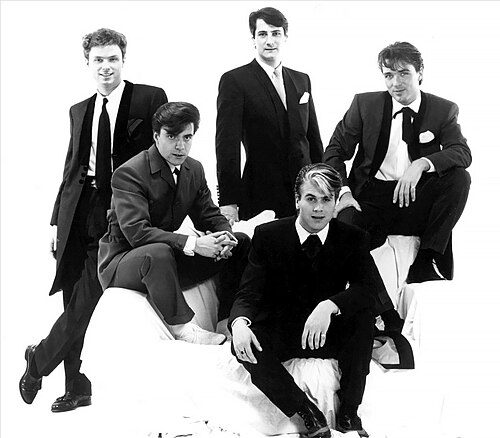
The soul obsession is stitched into the record itself. The lyric about listening to Marvin all night is a straight nod to Marvin Gaye. The band changed everything to match the new direction, putting Steve Norman on saxophone and swapping their old costumes for suits. Norman had barely started playing the instrument. "The solo is actually a composite of two takes," he told The Guardian. "I'd only been playing a year and was listening to Grover Washington Jr's 'Just The Two Of Us' with Bill Withers, over and over."
The messages hidden in the words
Kemp did not just write about Grogan. He smuggled her into the text. "The lyrics are full of coded messages to Clare," he told The Guardian. The most notorious is a line people have teased him about for years. "I'm still berated for the line 'Take your seaside arms' but it's straight out of Lolita by Vladimir Nabokov, which she had given me as a present," Kemp said. In Nabokov's novel the phrase is actually "seaside limbs," which Kemp changed to "arms." He has pointed to another borrowing too, saying the line about a thrill in his head and a pill on his tongue is also, in his word, a "bastardisation" of Nabokov.
So the gift became the code. Grogan handed Kemp a copy of Lolita, the two of them having bonded over books, and Kemp turned her present into the hiding place for feelings he could not say out loud. The woman who inspired the song had, without knowing it, supplied the exact words he used to disguise it.
Number one, and a way out of his parents' house
The chart facts come from the Billboard and UK singles tables, not the interviews. "True" was released as a single in April 1983, the title track of the band's third album, which was recorded at Compass Point Studios in the Bahamas. It reached number one on the UK Singles Chart at the end of April and stayed there for four weeks. In the United States it climbed to number 4 on the Billboard Hot 100, the band's only major American hit. It topped the charts in country after country.
What is easy to forget is that nobody in the band was sure about it. Singer Tony Hadley thought it would never even be released as a single, and as late as 2014 said he did not consider it their best song. Kemp knew otherwise the moment the studio filled up. "We never realized the full potential of this song until we started to record it at Compass Point," he wrote. "You can see the moment where we're playing back the song, half finished, in the studio, and everybody, including the roadies, are singing along to it. It was at that moment that I knew we had something special." The payoff was concrete. As Kemp put it, "With the royalties from 'True', I was finally able to move out of my parents' house." The bedroom where he wrote a love song he could not send became the thing he could finally afford to leave. This is exactly the kind of record that kept people glued to the radio in 1983, and an all-80s stream from the Bubble is on the way.
How the telling has grown over the decades
The drift in this story is not in the facts. It is in how candid Kemp has been willing to be. Early on, and even during the 2014 and 2015 documentary interviews, he stayed coy, describing the muse only as "a singer" he was "having this sort of platonic relationship with" and hinting at "a few cryptic clues in there." He would gesture at the secret without opening it. In the fuller Guardian tellings he opened it all the way: the name Clare Grogan, the tea with her parents in Scotland, the gift of Lolita, the exact lines he lifted and altered. The soul-song origin and the meaning, being too shy to be honest, have stayed rock steady across every version. What changed is that a young man who buried a woman's name in code eventually decided, decades on, to read the code out loud.
There is one honest limit worth stating. Everything here about the relationship comes from Kemp's side. He is the one who calls it unrequited and platonic, and he is the one who decides which lines point at Grogan. The song was designed so that only he held the key, and to a large extent he still does.
The honest bottom line
Strip the wedding-reception gloss off "True" and it is a monument to not saying something. Gary Kemp loved someone who did not love him back, could not tell her, and instead spent a soul ballad admitting he could not tell her, hiding her name in another author's words so she might never notice. It should be a sad song. It plays as the smoothest romantic record of 1983 because Kemp wrapped the cowardice in Marvin Gaye and a saxophone. That gap, between what the song confesses and how it feels, is exactly why it lasts. Everybody has had feelings too big to say. Not everybody got number one out of keeping quiet. That same year, the Thompson Twins turned a similar private feeling into Hold Me Now, another New Romantic ballad written in the middle of the emotion it describes, and together the two records prove that the movement's most lasting songs were the ones that dropped the pose.
FAQ
What is "True" by Spandau Ballet about? An unrequited crush. Gary Kemp wrote it about his one-sided infatuation with Altered Images singer Clare Grogan, and made the song itself about being too shy to admit his feelings, hiding coded references to her in the lyrics.
Who is "True" written about? Clare Grogan, the Scottish singer of Altered Images and star of the film Gregory's Girl. Kemp has said his feelings for her were unrequited and the relationship platonic, but it was "enough to trigger a song."
What does "take your seaside arms" mean in "True"? It is adapted from Vladimir Nabokov's novel Lolita, which Grogan had given Kemp as a gift. The book's phrase is "seaside limbs," which Kemp changed to "arms" and folded into the song as one of several coded messages to her.
Did "True" go to number one? Yes, in the UK, where it spent four weeks at number one at the end of April 1983. In the United States it peaked at number 4 on the Billboard Hot 100, the band's only major American hit.
Why does "True" mention Marvin Gaye? Because Kemp set out to write an American soul song in the style of Marvin Gaye and Al Green. The reference to listening to Marvin is a direct nod to Gaye, one of the two singers Kemp has named as his target sound.
Sources
- The Guardian, Gary Kemp and Steve Norman on "True," as quoted by Songfacts
- Gary Kemp's official website, quoted by Songfacts, on writing the song at his parents' house and the Compass Point studio moment
- Fox News, "Story Behind the Song: Spandau Ballet's 1983 hit single 'True'" (Ashley Dvorkin), May 4, 2015, from the band's Soul Boys of the Western World documentary press tour
- Songfacts, "True by Spandau Ballet"
- Wikipedia, "True (Spandau Ballet song)," for recording, chart history, and the band's own accounts
- Billboard Hot 100 and UK Official Singles Chart, 1983
This much is true: everything got checked.
Part of Stories Behind the Songs. See also Every Breath You Take and Time After Time.