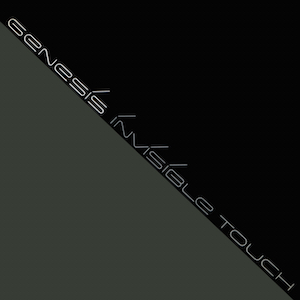
Three men walked into a studio in 1986 with no songs, no ideas and a blank sheet of paper. One of them started playing a guitar riff through an echo. The singer opened his mouth and the biggest hit any of them would ever have as a band came out in one line, fully formed, and then stayed at number one for exactly one week before their old lead singer knocked it off.
"Invisible Touch" was improvised. Genesis wrote by jamming with nothing prepared, and when Mike Rutherford played a guitar riff, Phil Collins sang the line about her having an invisible touch on the spot. They built the song around the hook. Collins was chasing the feel of Sheila E's "The Glamorous Life." It hit number one on July 19, 1986, the band's only Hot 100 number one.
No songs, no ideas, a blank bit of paper
By 1986 Genesis were three men with three separate careers. Collins had come off No Jacket Required, Rutherford had a top ten hit with Mike and the Mechanics, and Tony Banks was writing film music. The way they made a Genesis record anyway was to show up with nothing.
Rutherford has described the method plainly. "The best songs tend to get written quickly," he said. "That's how it was with 'Invisible Touch.' We'd rock up, have a cup of tea, [and] see what happened. On day one, we had no songs, no ideas, and a blank bit of paper. Phil was always keen to fill that bit of paper. He was very organized, and we let him."
Collins has described the same process as improvisation with the safety off. "We would arrive in the studio every day and just start playing," he said. "I'm sure people have all kinds of ideas about how we wrote these songs they love or loathe, but really our writing process was close to jazz."
The part that makes it believable is what he says about the failures. "We improvised. We weren't afraid to make lousy noises. We knew each other well: if I started singing crap, no one would say, 'What the hell are you doing?' Still, there was a good percentage of crap."
The line that arrived whole
The moment itself takes about four seconds to describe, which is roughly how long it took.
"One day Mike Rutherford played a riff on the guitar, with an echo, and I suddenly sang" the line about her seeming to have an invisible touch, Collins recalled. "It came into my head fully formed."
He has told it a second way with the emphasis on what happened next: "As soon as he started playing that I started singing, 'she seems to have an invisible touch.' At that moment we just knew that was a great hook, and then we just sort of wrote a song around it."
That is the whole origin. Not a concept, not a lyric sheet, not a demo. A riff, a sung line, and a band recognizing a hook in real time and reverse-engineering a song onto it.
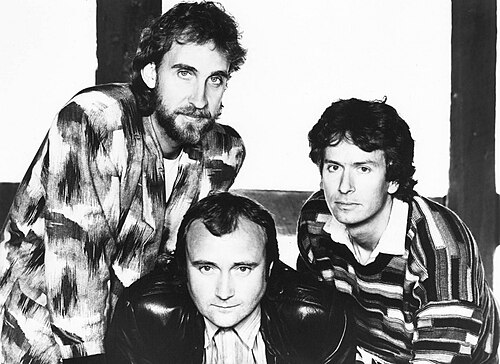
Where the riff came from, which is where the story gets slippery
Collins' own account puts the riff in open air, one day, out of nowhere. Other accounts place it precisely: the riff surfaced while the band was jamming on "Domino," the eleven-minute two-part epic that ended up on the same album, and it nearly stayed there.
Both Songfacts and Stereogum describe the riff emerging from the "Domino" sessions, with Collins hearing a different character in it and pulling it out. Collins' own telling does not mention "Domino" at all.
That difference matters more than it looks. In one version, Genesis' only American number one is a lucky accident on a random afternoon. In the other, it is a piece of their proggiest song that a pop instinct rescued. Nobody has reconciled the two, and the band has not been asked to.
The record Collins was actually chasing
The rhythmic feel of "Invisible Touch" was not a Genesis idea at all. Collins was trying to make something else.
"There was a Sheila E. record out at the time, I think it was '[The] Glamorous Life,'" he said, "and I wanted to write my own version of that."
That is a prog band's drummer trying to write a Prince production, which explains the drum machine, the clipped guitar and the fact that the song has almost nothing in common with the group that made "Supper's Ready."
Tony Banks is not sure about it
The most honest thing anybody in the band has said about the song comes from the keyboard player, and it is not a compliment exactly.
"For us it's a fairly straightforward rock song," Banks said. "I think it works really well because it's concise. I never think I'm going to like it, but then when I hear it, I like it. Intellectually I'm not too sure about it, but it works."
Collins, for his part, has explained why he stayed in a band he no longer needed commercially. "When you're in a band, it's family," he said in 2016. "There's the road crew and their families to think about. If you just flippantly say, 'I'm leaving,' they're like, 'We've just bought a house with a mortgage.'" His conclusion: "You can't do that to people."
Rutherford's 1986 read on the same question was shorter. "He's still the same. Nothing that happens outside seems to have much effect on us. We still go into the studio and write our songs as a group."
What the chart actually did, and who ended it
"Invisible Touch" debuted on the Billboard Hot 100 at number 45 on May 31, 1986 and reached number one on the chart dated July 19, 1986, moving up from number two. It is the only Hot 100 number one Genesis ever had.
It held the spot for one week. On July 26, 1986, it was replaced at number one by "Sledgehammer" by Peter Gabriel, the man who had fronted Genesis for the first six years of their existence.
How the telling has grown over the decades
- 1986 (contemporary press): Rutherford does the talking while the album is new, describing a band unchanged by Collins' solo fame and still writing together in a room.
- Undated band interviews (compiled by Songfacts): Collins gives the compressed version of the hook arriving, and Banks gives his ambivalent verdict on the song. These circulate without dates attached, which is worth saying out loud.
- 2016 (Collins, on staying in Genesis): the reason he did not leave, framed around the crew's mortgages rather than the music.
- 2024 (American Songwriter, compiling Collins and Rutherford): the fullest version of the writing method, the jazz comparison, the lousy noises, and the Sheila E ambition.
The unresolved drift is the riff's origin, freestanding jam or a piece lifted out of "Domino," and the fact that most of the best Collins quotes on this song circulate without a firm date or original outlet attached. We have marked which ones those are rather than dressing them up.
The honest bottom line
"Invisible Touch" is a song about nothing in particular, built on a hook that arrived before the words meant anything, by a band openly imitating a Prince production, and its own keyboard player has said he is not intellectually sure about it. It is also the tightest three and a half minutes Genesis ever recorded, and the reason it works is exactly the reason the art-rock faithful resent it: nobody thought about it. Twenty years of prog discipline went into being able to catch a hook the second it appeared and not ruin it. Five years earlier, Collins had sat alone in a house and poured a divorce into In the Air Tonight; here, surrounded by the same band, he chased a hook instead of a feeling, and caught the biggest one Genesis ever had.
FAQ
How did Genesis write "Invisible Touch"? By accident, in the room. Mike Rutherford played a guitar riff through an echo during a jam and Phil Collins immediately sang the invisible touch line over it. Collins has said it came into his head fully formed, and the band wrote the song around it.
What is "Invisible Touch" about? A woman who has power over the singer. Collins wrote the words to fit a hook he had already sung, and he has described the process as improvisation rather than composition.
Was "Invisible Touch" inspired by another song? Yes. Collins has said he was trying to write his own version of Sheila E's 1984 hit "The Glamorous Life," which Prince wrote.
Was "Invisible Touch" a number one hit? Yes, for one week. It topped the Billboard Hot 100 on the chart dated July 19, 1986, the band's only number one there, and was replaced the following week by Peter Gabriel's "Sledgehammer."
Did the riff come from another Genesis song? Possibly. Several accounts place the riff's origin in the band's jamming on "Domino," from the same album. Collins' own telling does not mention "Domino," and the two versions have never been reconciled.
What did the rest of the band think of it? Tony Banks has been openly ambivalent: "I never think I'm going to like it, but then when I hear it, I like it. Intellectually I'm not too sure about it, but it works."
Sources
- American Songwriter, "The Story Behind 'Invisible Touch'...," May 31, 2024, for the Collins and Rutherford quotes on the writing process, the Sheila E influence and the 1986 Rutherford comments
- Songfacts, "Invisible Touch by Genesis," for the alternate Collins telling and the Tony Banks quote
- Stereogum, "The Number Ones: Genesis' 'Invisible Touch'," December 21, 2020, for the Domino jam account
- Billboard Hot 100 weekly charts, July 19 1986 and July 26 1986
Nothing invisible about our sourcing.
Part of Stories Behind the Songs. See also Sledgehammer and In the Air Tonight.