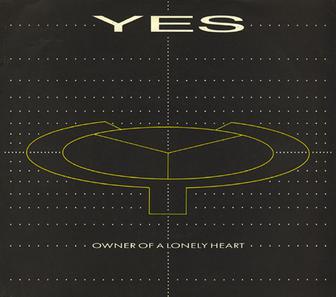
The riff was written on a toilet. The producer only discovered the song because the demo tape kept running while the guitarist was in the bathroom. Then that producer had to get on his knees and beg a legendary prog band to record the most commercial thing any of them had ever touched, a song the guitarist insisted was not even meant for them. Owner of a Lonely Heart became the only number one single Yes ever had, and almost everyone who worked on it remembers the making a little differently.
"Owner of a Lonely Heart" grew from a solo demo Trevor Rabin wrote around 1980, with the riff and title conceived in his bathroom. Producer Trevor Horn heard the demo playing while Rabin was in the toilet and pushed to record it for the reformed Yes on their 1983 album 90125. Rabin resisted, Horn begged the band, and the song hit number one on the Billboard Hot 100 in January 1984, credited to Rabin, Jon Anderson, Chris Squire, and Horn.
A song written in the bathroom
Trevor Rabin, the South African guitarist brought in to reinvent Yes, did not write "Owner of a Lonely Heart" for Yes at all. He wrote it alone, and the core of it arrived in the least ceremonial place possible. Guitar Player, revisiting the song in 2024, put it flatly: this was the track "the riff of which was written on the toilet." Songfacts, drawing on Rabin's own account from a Yes home-video release, notes that he came up with the bass line and the title in his bathroom, which had very good acoustics, during a "particularly long visit."
By the time Rabin presented it, the demo was close to complete. The chorus, the dramatic synth stabs, the hook: they were already there. Even Jon Anderson, who would rejoin to sing it, admits how finished it sounded. "I remember hearing Trevor's original demo," Anderson told Classic Rock, "which wasn't far from the finished product."
The tape that gave it away
The reformed band, briefly called Cinema, was Rabin with Yes veterans Chris Squire, Alan White, and Tony Kaye. Trevor Horn, the Buggles singer turned studio wizard who had briefly fronted Yes himself, came in to produce, and he was not impressed at first. When he visited to hear Rabin's demos, he found them "a bit of a drag."
Then came the accident that made the record. Horn's telling, in Classic Rock, is vivid: Rabin left the room and the tape rolled on to a rough version of "Owner of a Lonely Heart." "As he came out, I said to him: 'That's a hit chorus,'" Horn recalled. "He said: 'No, no, this is not for Yes. I wrote it for someone else.' But I said: 'Yes could do this song'." Getting it recorded took more than persuasion. By Horn's account he had to drop to his knees and beg the band to do it at all.
Building the verses
The demo had a chorus but the verses were unresolved, and that is where Anderson earned his writing credit. He is precise about the division of labor. "The song was already finished, but there were no verses," Anderson told Songfacts. "They had tried some verses and it really wasn't working. They had the chorus, they had the arrangement. I came in and all the songs were virtually put together, but there was a lack of choruses here, verses there. I went in for three weeks with Trevor and sort of filled everything in."
He even remembers the exact handoff. "I remember sitting with Trevor Rabin and we started off, 'Move yourself, you always live your life never thinking of the future.' That was the line I wrote. And then he'd say, 'Prove yourself, win or loser.' And then he said, 'Jon, I've got to go. You carry on.' So I just carried on writing the lyrics to the verses. The chorus was already well organized by Trevor," Anderson told Songfacts.
Horn takes the drums apart
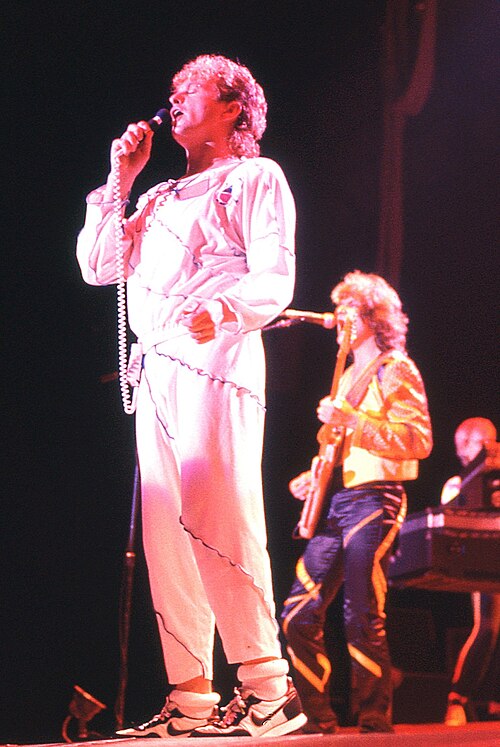
The sound of the record is Horn's radical production, and Alan White watched his own drum kit get dismantled piece by piece. "I started with a full drum kit and Trevor Horn said, 'Take Alan's toms away,'" White told Uncut in September 2014. "So I had a base and snare, hi-hat and cymbals. Then they took the cymbals away, I was playing along with the track and they took the hi-hat away!" What remained was layered over with samples and stabs, a construction so far from prog that Songfacts calls it possibly the first rock hit to use a sample.
The famous solo was just as engineered. Rabin described the setup to Guitar Player in a 2009 interview: "there were two amps facing each other about a foot apart, with basic dynamic mics placed right up against the speakers on each amp. One amp had the regular guitar signal going into it, and the other had just the fifth harmony from an MXR Pitch Transposer." The lurching, harmonized break that results sounds like a machine malfunctioning on purpose.
How the telling has grown over the decades
Every teller of this story owns a different piece of it, and the pieces do not always fit cleanly. Horn tells the tape-in-the-bathroom discovery and the begging. Rabin tells the toilet and the two-amp solo. Anderson tells the three weeks of filling in verses. White tells the vanishing drum kit. Lined up, they build one song, but the seams are visible, and honesty means pointing at them.
The sharpest drift is over trust and credit. Jon Anderson does not fully buy Horn's version of events. "I'm never quite sure that what Trevor Horn says is really true," Anderson told Classic Rock. "He's a very talented guy, but, like a lot of people, you're not quite sure what they mean by what they say." The writing credit, split four ways between Rabin, Anderson, Squire, and Horn, has been argued over for decades. Rabin has maintained the song already had its defining features when he brought it in, so a four-way split flatters everyone else. Anderson tells it from the other side: "But the verses were a bit ordinary. I actually wrote all the verses, the first with Trevor Rabin and the rest with Trevor Horn. Everybody wanted their finger in the pie," he told Classic Rock. Both men are describing the same song and quietly claiming more of it. That tension never fully resolves, and it is more interesting than any tidy version would be.
The honest bottom line
Purist Yes fans have never forgiven "Owner of a Lonely Heart" for being a pop record, and they have a point: it is a machine-built single, sampled and stripped and harmonized in a studio, credited to a committee that still bickers over the math, from a guitarist who did not even want the band to have it. It was also the smartest thing they ever did. Yes did long-form epics; they did not make radio music. "The record company already said it was gonna be Number One," Anderson told Classic Rock. "Yes did long-form pieces; we didn't make music for radio. But I was thinking: 'Well, I've never strived to have a hit record. Why not try it this time.'" They tried it once, and it worked once, and it turned an esoteric prog band into MTV stars. Anderson's verdict holds up: "I think it's aged very well," he told Classic Rock. "It doesn't sound dated at all."
FAQ
What is the story behind "Owner of a Lonely Heart"? Trevor Rabin wrote the song as a solo demo around 1980, coming up with the riff and title in his bathroom. Producer Trevor Horn overheard the demo while Rabin was out of the room, decided it was a hit, and pushed the reformed Yes to record it for their 1983 album 90125, despite Rabin's objection that it was not a Yes song.
Who wrote "Owner of a Lonely Heart"? It is credited to Trevor Rabin, Jon Anderson, Chris Squire, and Trevor Horn. Rabin wrote the riff, chorus, and core of the demo; Anderson wrote most of the verse lyrics; Horn shaped the production. The exact split has been disputed by the writers themselves for years.
Did Trevor Rabin really write it on the toilet? Yes. Rabin has said the bass line and the title came to him in his bathroom, which had good acoustics, during a long visit. Guitar Player has described it plainly as the song whose riff was written on the toilet.
Was "Owner of a Lonely Heart" a number one hit? Yes. It reached number one on the Billboard Hot 100 in January 1984, the only Yes single ever to top the US chart. It also hit number one on the Mainstream Rock chart and finished number 8 on the 1984 US year-end chart. In the UK it reached number 28.
What band did Trevor Horn used to be in? Horn was the singer of the Buggles, whose "Video Killed the Radio Star" was the first video played on MTV. He also briefly fronted Yes in 1980 before becoming one of the most influential producers of the decade. While "Owner of a Lonely Heart" topped the US chart, another Horn production, Frankie Goes to Hollywood's "Relax," was climbing to number one in the UK.
Sources
- Classic Rock, "Owner Of A Lonely Heart by Yes: the story behind the song," interviews with Jon Anderson and Trevor Horn (archived at loudersound.com)
- Songfacts, "Owner Of A Lonely Heart by Yes," including a Songfacts interview with Jon Anderson and Rabin's account from the Yes home-video release
- Guitar Player, Trevor Rabin on the recording of the solo, June 2024 (quoting a 2009 Guitar Player interview)
- Uncut, Alan White on the drum recording, September 2014 (via Songfacts)
- Wikipedia, "Owner of a Lonely Heart," chart tables citing Billboard and the Official Charts Company
- Billboard Hot 100, week of January 21, 1984 (Owner of a Lonely Heart at number one)
Much better than the owner of an unchecked claim.
Part of Stories Behind the Songs. See also Video Killed the Radio Star and Here I Go Again.