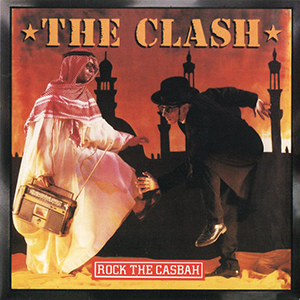
The drummer wrote almost all of it, alone in the studio, then got fired for heroin before it became a hit and never even appeared in the video. The famous title came from a friend playing violin who misheard what Joe Strummer was shouting. The original words were too filthy to print and got thrown in the bin. And the finished song, an anti-censorship anthem written in sympathy with ordinary Iranians, ended up as a battle cry for the American military, its title scrawled on a bomb, and by a friend's account Strummer wept. "Rock the Casbah" is The Clash's biggest hit and possibly the one that hurt them most.
"Rock the Casbah" was built by Clash drummer Topper Headon, who recorded the drums, piano, and bass largely by himself. Joe Strummer threw out Headon's original lyrics and wrote a new set inspired by Iran's post-revolution ban on Western music, imagining a king outlawing rock and the people defying him. Released on the 1982 album Combat Rock, it reached number 8 on the Billboard Hot 100, The Clash's only American top 10 hit.
The drummer built the whole thing
The single most surprising fact about "Rock the Casbah" is who made the music. It was not the famous songwriting pair of Strummer and Mick Jones. It was drummer Topper Headon, who arrived at the studio early with a piano part in his head and, finding himself alone, laid down the entire backing track one instrument at a time. Strummer never hid this. "The real genius of 'Rock The Casbah' is Topper," he said. "He banged down the drum track. Then ran over to the piano and then the bass." Headon played the drums, the piano riff, and the bass. The bones of the song are almost entirely his.
The tragedy is stitched into that fact. Headon was deep in heroin addiction, and he was thrown out of the band because of it right as Combat Rock launched, before "Rock the Casbah" became a hit. When you watch the video, the drummer is not Headon at all. It is Terry Chimes, the band's original drummer, brought back to replace him. The man who wrote the biggest hit The Clash ever had was gone before it paid off, and does not appear in its most-seen artifact.
The dirty lyrics that got thrown out
Headon did not just write the music. He wrote words too, and they were unusable. According to former Clash co-manager Kosmo Vinyl, Headon's original lyric was a filthy ode to a girlfriend. "He had really pornographic lyrics for it if I remember correctly," Vinyl told Rolling Stone. "Very, very pornographic lyrics." Strummer took one look and binned them, but he kept the track, because the music was too good to waste. So he needed a new lyric to fit it.
The title nobody quite said on purpose
The phrase "rock the casbah" existed before the song did, and it came from a misunderstanding. Strummer had been in a jam session with his violinist friend Tymon Dogg, who started playing Eastern-sounding scales. Strummer began shouting "rock the casbah!" over the top of it. Dogg, not hearing him clearly, thought Strummer was yelling at him to "stop, you cadger!" The phrase stuck in Strummer's head as something he wanted to use one day.
The first actual line came from an argument. Manager Bernie Rhodes was frustrated that every track in the Combat Rock sessions kept running long, and in one session he snapped, "Does everything have to be as long as raga?!" That word, raga, lodged in Strummer's mind. As Strummer told Rolling Stone shortly before his death in 2002, "I got back to the hotel that night and wrote on a typewriter, 'The King told the boogie men You gotta get that raga drop.' I looked at it and for some reason I started to think about what someone had told me earlier, that you get lashed for owning a disco album in Iran."
A song about Iran, not against it
That one detail, being lashed for owning a disco album, gave Strummer the whole story. He wrote a fable: a king, called the Sharif in the song, outlaws Western rock music, and the people defy him, holding their forbidden music up in the face of the ban. The lyric is packed with words borrowed from across the region, Casbah and Bedouin and muezzin and Sharif, but its sympathy is clear. It is on the side of the people who want to dance, against the authority trying to stop them. Strummer was reacting to the real restrictions on music that followed Iran's 1979 revolution, and his instinct, as always with The Clash, was to side with the kids and against the censors.
This is the point that got lost almost immediately, and it matters. "Rock the Casbah" is not mocking Iranians or Arabs. It is defending the ordinary person's right to their music against a ruler who would ban it. The record even keeps the desert imagery affectionate and absurd rather than hostile. But a catchy song with Middle Eastern flavor, released by a foreign band, was very easy to hear wrong, and America heard it wrong.
The number, and the war that stole it
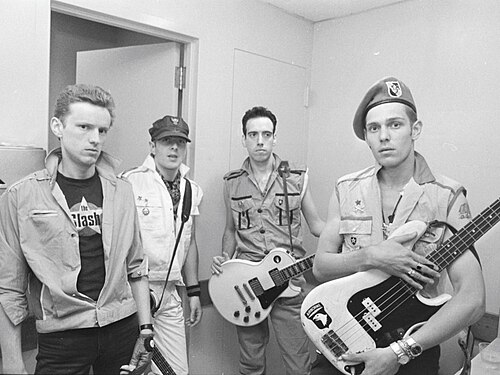
The chart facts come from the Billboard tables. "Rock the Casbah" was the third single from Combat Rock and became The Clash's biggest American hit by far, reaching number 8 on the Billboard Hot 100, the only time the band ever cracked the US top 10. In Britain, oddly, it only reached number 30. For a band revered at home as rock rebels and treated in America as a catchy import, that gap says a lot. This is exactly the kind of record that made 80s radio unpredictable and worth taping, and an all-80s stream from the Bubble is on the way.
Then came the part that gutted Strummer. During the 1991 Gulf War, Armed Forces Radio chose "Rock the Casbah" as the first song broadcast on its service covering the region during Operation Desert Storm, and it was embraced as a rallying cry against Iraq. It was one of the most requested songs on US radio, on the mistaken belief that it was anti-Arab. In the 2007 documentary Joe Strummer: The Future Is Unwritten, a friend recounts that Strummer wept when he heard the phrase "Rock the Casbah" had been written on an American bomb bound for Iraq. A song he wrote in defense of people denied their music had been turned into ordnance aimed at people in the same part of the world. The Cure's "Killing an Arab," an anti-racist song drawn from a Camus novel, suffered a similar fate of being misread and misused.
How the telling has grown over the decades
The pieces of this story arrived from different people over many years, which is why it took so long to see it whole. Strummer's own definitive account, the typewriter, the raga, the disco album in Iran, came in that Rolling Stone interview right at the end of his life in 2002. Kosmo Vinyl's memory of Headon's pornographic first draft filled in what the song replaced. The Tymon Dogg jam explained where the title really came from. And the 2007 documentary, made after Strummer had died, delivered the darkest layer, the bomb and the weeping, from the people who were there.
There is one honest tension to keep in view. The song is credited to Headon, Strummer, and Jones together, and Strummer generously called Headon the genius of it. But the credit blurs a real split: the music that made it a hit is overwhelmingly Headon's, and the political lyric that made it mean something is Strummer's. Both men shaped it, at different moments, and neither telling is complete without the other. That is not a contradiction to smooth over. It is just how a song gets made when one member records the track alone and another rewrites the words in a hotel room days later.
The honest bottom line
Strip the myth away and "Rock the Casbah" is a pile of accidents that landed perfectly and then curdled. The drummer wrote the hit and got fired before it paid. The title was a mishearing, the first line was a manager's insult, the original words were pornographic trash. Strummer built something genuinely humane out of that mess, a song siding with people against the powers that would silence them, and watched it get adopted by a war as a weapon against those same people. It is The Clash's biggest success and, in a way, their bitterest. The band that wanted to mean something finally conquered America with a song America completely misunderstood. The same album's other single, Should I Stay or Should I Go, would not even find its audience for another decade, when a jeans advert dug it up and sent it to number one.
FAQ
What is "Rock the Casbah" about? It is a fable about a king, the Sharif, banning Western rock music, and the people defying him by rocking anyway. Joe Strummer wrote it in response to Iran's post-1979 restrictions on music, having heard that you could be lashed for owning a disco album there. Its sympathy is with the people who want their music, not against them.
Who wrote "Rock the Casbah"? It is credited to Topper Headon, Joe Strummer, and Mick Jones. Headon, the drummer, wrote and recorded most of the music by himself, including the piano riff, and Strummer wrote the finished lyrics after discarding Headon's original words.
Why was Joe Strummer upset about "Rock the Casbah" during the Gulf War? Because the US military embraced it as an anti-Iraq anthem during Operation Desert Storm in 1991, misreading a song that was actually pro-people and anti-censorship. A friend in the 2007 documentary about Strummer says he wept on hearing the title had been written on an American bomb.
Did "Rock the Casbah" reach number one? No. It peaked at number 8 on the Billboard Hot 100, which was still The Clash's only US top 10 hit and their biggest American success. In the UK it only reached number 30.
Where did the phrase "rock the casbah" come from? From a jam session. Strummer shouted "rock the casbah!" over his friend Tymon Dogg's violin, and Dogg misheard it as "stop, you cadger!" The phrase stayed in Strummer's head until he had a song to use it in.
Sources
- Songfacts, "Rock The Casbah by The Clash," including Joe Strummer's quotes and Kosmo Vinyl's account to Rolling Stone
- American Songwriter, "The Meaning Behind The Clash's 1982 Hit 'Rock the Casbah'" (Tina Benitez-Eves), May 20, 2022
- Rolling Stone interview with Joe Strummer, 2002, as cited by Songfacts and American Songwriter
- Joe Strummer: The Future Is Unwritten (documentary), 2007, as cited by Wikipedia
- Wikipedia, "Rock the Casbah," for the Tymon Dogg origin, chart history, and Gulf War account
- Billboard Hot 100 weekly charts, 1982 and 1983
The King told the boogie men to verify their claims.
Part of Stories Behind the Songs. See also Should I Stay or Should I Go and I Melt with You.