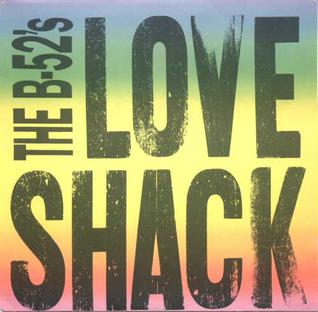
The biggest song of the B-52s' career started as an unfinished 15 minute jam that was not going to make the album. The producer heard a chorus in it while sitting on the studio steps. And the three words everybody screams at weddings were an accident that the band could never reproduce, so the producer built the rest of the record around the accident. There is no single Love Shack, either. Ask the three people singing and you get three different buildings.
"Love Shack" grew out of a 15 minute B-52s improvisation that producer Don Was turned into a song on a spare studio day during the Cosmic Thing sessions in 1989. Fred Schneider had the title, Kate Pierson pictured her own Georgia cabin, Cindy Wilson pictured a country bar, and Wilson's "tin roof, rusted" was an unplanned ad-lib kept from the first take. It peaked at number 3 on the Billboard Hot 100 on November 18, 1989.
The album nobody was sure would exist
Cosmic Thing was the first album the B-52s made after guitarist Ricky Wilson, Cindy Wilson's older brother, died of AIDS in 1985 at 32. The band stopped touring and was not certain it would continue. Kate Pierson has been direct about what the sessions were for.
"But we didn't aim to write hits, we aimed to heal ourselves and channel Ricky's spirit," she told Billboard in 2019, for a 30th anniversary oral history of the album. "That was the goal, and I knew his presence was there."
They recorded most of Cosmic Thing with Nile Rodgers at Sigma Sound in New York City, and four songs with Don Was at Dreamland Studios in West Hurley, New York, near Woodstock. Keith Strickland remembered the room fondly, and one specific night. "I remember when we were recording 'Love Shack,' a lightning storm knocked out the electricity in the middle of the song during the bass breakdown," he told Billboard. "So we took a dinner break, went to the Gypsy Wolf Mexican Restaurant in Woodstock. Then returned to the studio and listened to the last take, and realized how good it sounded, so we quickly went for another take and spliced to the two together."
The song almost did not make the record
The B-52s wrote by jamming, which is why the song existed only as a shapeless block of tape when the sessions were nearly over.
"We finished all the songs we had to do a day early, so we had this extra day to do something," Was told Billboard. "So they said, 'We have this other thing, but its 15 minutes long and we haven't figured it out.' I remember sitting on the steps outside the studio and thinking about this thing they were improvising about a love shack and going, 'Well maybe that's the chorus.'"
Pierson confirms how close it came to being left off entirely. "I remember how 'Love Shack' wasn't put together yet, and Don said how it needed a chorus," she told Billboard. "It wasn't even gonna make the album because it wasn't solidified. But after we added that chorus, Bingo, here it is; it sounds like a hit."
Pierson has also described the argument inside the band about that structure. Speaking in a 2019 Top 2000 a gogo documentary for Dutch public television, quoted by American Songwriter, she recalled that the line about the love shack being a little old place happened exactly once in the jam. "And so Fred and I had a little sort of argument about the chorus, [it] has to happen more. So when we did the chorus a few times it sort of all came together."
Was described the surgery in one sentence: "So we started rearranging the lyrics like a puzzle, and we were able to get it down to three and a half minutes with a chorus and some semblance of a plot line and cut it."
Three singers, three different shacks
This is the part most write-ups get wrong by picking one answer. There is no one Love Shack, because the B-52s wrote by all singing at once, each with a different picture in their head.
Fred Schneider had the title first and a specific building behind it, though he had only been there one time. "I came up with the title and then I pictured this club I went too. Just once. And it was basically a shack in the middle of nowhere," he told the New Zealand Herald in 2017. "It was a soul club, an African-American club. And you open the door and it's just bright lights and wild music and dancing and everyone's having a good time."
Then he says the quiet part out loud: "So that's how I pictured it. Kate [Pierson, vocalist] pictured her house. I don't know what Cindy [Wilson, vocalist] pictured. We each had our own interpretation but I just thought it was a good title."
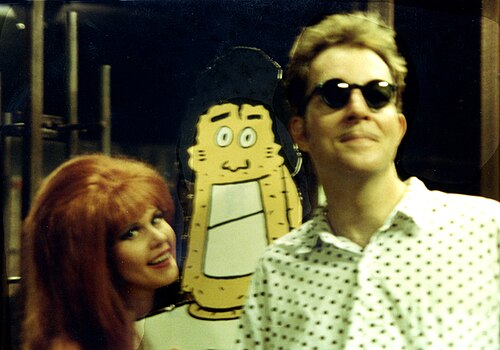
Cindy Wilson filled in her own answer in a 2019 Songfacts interview, when the interviewer put to her that the song was supposedly about Kate's house. "Well, no. When you're jamming, everybody is conjuring up their own images. Sometimes we're all singing at the same time and later you go back and you hear what you're doing," she said. "I personally was thinking about this bar that was out in the country [the Hawaiian Ha-Le]. It was a really cool place - a run-down love shack kind of thing, but it was a disco. It was a really interesting place." The bracketed identification is Songfacts', naming a club outside Athens, Georgia that the band used to go to.
Pierson's shack is a real address. She lived in a five-room cabin with a tin roof outside Athens in the 1970s, where the band worked up material including "Rock Lobster." She has been blunt that the famous line is not code for anything. "There's been wild speculation about what 'tin roof rusted' means," she said in the Top 2000 a gogo documentary. "Well, it's just literal, in Georgia, there were a lot of cabins, my house outside had a rusted tin roof because it was a funky old shack."
The accident at the end of the record
The full-stop breakdown near the end, where the music drops out, Schneider asks "You're what?" and Cindy Wilson howls "Tin roof, rusted," was not written. It happened.
Don Was, to Billboard: "The first take was killer except when we got to the tin roof rusted part. Cindy started with this exuberance that shocked everybody. I don't know what that line means; I don't think anybody knew what that line means (laughs). But she infused it with so much feeling, it threw everybody. I think she even choked up at the end of the line."
They tried to do it again. They could not. "It was really deep, and we tried to do it over and over and we couldn't get the feeling we had in that first take," Was said. "It took me all night to figure it out before I realized everything should be punched in right after the tin roof rusted line, because we never got that thing back again, that manic energy."
So the finished record is built backward around one unrepeatable vocal moment. Everything after that line was punched in to preserve it.
Radio did not want it
The song that is now unavoidable at every wedding reception in America was a hard sell to programmers.
"We had a hard time selling 'Love Shack' at first," Schneider told Billboard. "I remember our A&R guy taking me around while Kate and Cindy would do soundcheck and we would go to radio stations basically to beg them to play the song. Even the record company thought it was too weird. I thought it was the most accessible thing we had done. College radio embraced it immediately, but mainstream wouldn't touch it until they saw how well it was doing."
And his summary of the ceiling it hit: "We went to No. 1 in several markets, though in America we were beat out by Milli Vanilli and Paula Abdul, both of whom were accused of not singing on their hit songs!"
What the charts actually did
The Billboard weekly tables back Schneider up almost too neatly. "Love Shack" entered the Hot 100 dated September 2, 1989 at number 84 and climbed for eleven weeks. It jumped from number 6 to number 3 on the chart dated November 18, 1989, and held number 3 the following week.
On that November 25 chart, the song sitting at number one and blocking it was "Blame It On the Rain" by Milli Vanilli. A week earlier, the number one was "When I See You Smile" by Bad English, the band Jonathan Cain formed after Journey.
Number 3 was the B-52s' commercial peak. It was also their first Top 40 hit, eleven years into their career.
How the telling has grown over the decades
2017, New Zealand Herald: Schneider gives the cleanest account of the title's origin, the soul club he visited exactly once, and openly says the three singers each pictured something different. He does not name the club.
June 2019, Billboard (Ron Hart): The 30th anniversary oral history, and the only place the production side is documented in full. Don Was on the spare day, the 15 minute jam, the chorus idea on the studio steps, and the unrepeatable first take. Pierson on the album as grief work. Strickland on the lightning storm. Schneider on begging radio stations.
August 2019, Songfacts (Jeff Suwak): Cindy Wilson corrects the record on whose shack it is and describes the band's all-at-once writing method, which is why the question has no single answer.
2019, Top 2000 a gogo documentary, quoted by American Songwriter in January 2021: Pierson describes the shack as a place anyone could go, tells the chorus argument from her side, and shuts down the rumors about what "tin roof rusted" means.
The drift here is not about facts, it is about ownership. Every telling adds one more person's version of the same building, and nobody in the band has ever tried to declare a winner. Schneider says outright that he does not know what Cindy pictured. That is unusual and it is the most honest thing about the song.
The honest bottom line
"Love Shack" is a party song assembled out of an unfinished jam by a producer under deadline, from a band that had just lost its guitarist and was not sure it wanted to keep going. The lyric that made it immortal is an accident nobody could repeat, and the line everybody quotes means nothing more than a rusty roof on an old cabin. It peaked at number 3, behind an act that was later found not to be singing on its own records. None of that dents it, because the joy on the tape is real joy, made by four people who went back to work on purpose to feel something other than grief.
FAQ
What is the story behind "Love Shack" by the B-52s? It came out of a 15 minute improvised jam during the 1989 Cosmic Thing sessions. With one spare studio day left, producer Don Was suggested the love shack part could be a chorus, the band rearranged the lyrics into a three and a half minute song, and it became their biggest hit.
Was the Love Shack a real place? Several. Fred Schneider pictured a soul club in the middle of nowhere that he had visited once. Kate Pierson pictured the five-room Georgia cabin with a tin roof where she lived in the 1970s. Cindy Wilson pictured a run-down country bar outside Athens that Songfacts identifies as the Hawaiian Ha-Le.
What does "tin roof, rusted" mean? Nothing hidden. Kate Pierson has said it is literal, describing a Georgia cabin with a rusted tin roof. Cindy Wilson has said the same about the country bar she had in mind. Don Was, who produced it, said plainly that he did not know what the line meant and did not think anybody did.
Was "tin roof, rusted" improvised? Yes. It came out of the first take with what Was called an exuberance that shocked everybody, and the band could never recapture it on later attempts, so Was kept that take and punched in everything after the line.
Did "Love Shack" go to number one? No. It peaked at number 3 on the Billboard Hot 100 on the chart dated November 18, 1989, and held there the next week, blocked by Milli Vanilli's "Blame It On the Rain." It was the band's first Top 40 hit.
Why is "Love Shack" connected to Ricky Wilson? Cosmic Thing was the first album the B-52s made after Ricky Wilson, the band's guitarist and Cindy Wilson's brother, died in 1985. Kate Pierson has said the sessions were about healing and channeling his spirit rather than chasing a hit.
Sources
- Billboard, "The B-52's 'Cosmic Thing' at 30: How the Band Overcame Loss and Found Catharsis at the 'Love Shack'," Ron Hart, June 28, 2019
- Songfacts, Songwriter Interviews series, Cindy Wilson of The B-52s, Jeff Suwak, August 1, 2019
- New Zealand Herald, Fred Schneider interview, February 2, 2017
- American Songwriter, Behind the Song, "Love Shack," Rick Moore, January 20, 2021, quoting Kate Pierson in the 2019 Top 2000 a gogo documentary for Dutch public television
- Songfacts song page for "Love Shack," for the identification of the Hawaiian Ha-Le club
- Billboard Hot 100 weekly charts dated November 18 and November 25, 1989
The love shack is a little old place where the facts get together.
Part of Stories Behind the Songs. See also Faithfully and Time After Time.