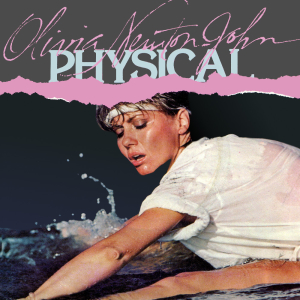
There were songs in the 80s you could not get away from. You would change the station and there it was again, week after week, sitting on top of the countdown like it owned the spot. Casey Kasem would work his way up to number one and it was the same record it had been a month ago. Some songs did not just hit the top. They moved in and refused to leave.
The longest-running number one song of the 1980s was "Physical" by Olivia Newton-John, which held the top of the Billboard Hot 100 for 10 straight weeks from November 1981 into January 1982. Right behind it, "Bette Davis Eyes" by Kim Carnes and "Endless Love" by Diana Ross and Lionel Richie each spent nine weeks at number one in 1981. No song in the decade matched Newton-John's ten-week grip.
The ten-week champion
"Physical" is the record holder, and it is not close for the crown. Olivia Newton-John took it to number one and kept it there for ten consecutive weeks, from November 21, 1981, through January 23, 1982. For two and a half months, at the turn of the year, it was simply the number one song in America, over and over.
That kind of run was rare for a reason. In the 80s, the top of the chart tended to turn over quickly, with new number ones arriving almost monthly. For a single record to hold for ten weeks, it had to be everywhere at once: on Top 40 radio, on MTV, in every store. "Physical" was, and its slightly scandalous workout-video image only pushed it harder.
The nine-week club
Two songs from 1981 tie just behind it at nine weeks each. "Endless Love," the Diana Ross and Lionel Richie duet from the film of the same name, held for nine weeks and became one of the definitive ballads of the era. "Bette Davis Eyes" by Kim Carnes also totaled nine weeks, but with an asterisk: its run was not fully consecutive, because the novelty medley "Stars on 45" knocked it out of the top spot for a single week before it climbed back.
That interruption is a nice reminder of how the chart actually worked. Holding number one for nine or ten weeks meant fending off every new release aimed straight at you, and even a novelty record could break your streak for a week.

The eight and seven-week heavyweights
Just below the leaders sit some of the decade's biggest names. The Police spent eight weeks at number one in 1983 with "Every Breath You Take," a song so ubiquitous it defined that summer. At seven weeks each came a murderer's row: Michael Jackson's "Billie Jean" in 1983, "Ebony and Ivory" by Paul McCartney with Stevie Wonder in 1982, and Joan Jett and the Blackhearts' "I Love Rock 'n' Roll" in the spring of 1982. Any one of those would top most other years easily. In the 80s they were merely very long runs, not records.
The honest bottom line
Weeks at number one measure saturation, not greatness, and the two do not always match. A song can dominate for ten weeks because it hit the exact center of the mainstream, not because it was the best record of its year, and plenty of shorter-lived number ones aged better than the long-haul champions. But there is something honest about the list anyway. These are the songs that genuinely owned their moment, the ones a whole country could not escape and mostly did not want to. Longevity at the top is its own kind of monument, even when the critics would have voted differently.
FAQ
What song was number one the longest in the 80s? "Physical" by Olivia Newton-John, which spent 10 consecutive weeks at number one on the Billboard Hot 100 from November 1981 to January 1982. It is the longest single run of the decade.
Which songs spent nine weeks at number one in the 80s? "Endless Love" by Diana Ross and Lionel Richie and "Bette Davis Eyes" by Kim Carnes, both in 1981. "Bette Davis Eyes" reached nine weeks non-consecutively after being interrupted for one week by "Stars on 45."
How long was "Every Breath You Take" number one? The Police held number one for eight weeks in 1983 with "Every Breath You Take," making it one of the longest-running chart-toppers of the decade.
How many weeks was "Billie Jean" at number one? Michael Jackson's "Billie Jean" spent seven weeks at number one in 1983 before it was knocked off by Dexys Midnight Runners' "Come On Eileen."
Why did some 80s songs stay at number one so long? Because a true blockbuster hit radio, MTV, and record stores all at once, dominating every way people consumed music. Total saturation across all those channels is what kept a song on top for many weeks.
Did long runs at number one mean a song was the best of the year? Not necessarily. Weeks at number one measure how widely a song saturated the mainstream, not its quality. Some shorter-lived number ones are more admired today than the longest-running ones.
Part of our guide to 80s One-Hit Wonders. See also Come On Eileen.
Chart-week counts come straight from the record, as always.