On a clear night in the middle of the country, a kid in Iowa or Indiana or Wisconsin could lie in bed with a transistor radio and pull in a station hundreds of miles away in Chicago. It came in strong because it was enormous, 50,000 watts pushing Top 40 across half the continent. That was WLS, and for a generation of Midwesterners it was the sound of the big city coming through the dark.
WLS was a Top 40 powerhouse at 890 on the AM dial in Chicago, broadcasting with 50,000 watts of clear-channel signal that reached across the Midwest and, at night, much of the country. From 1960 to 1989 it was one of America's dominant music stations, home to legendary DJs like Larry Lujack and John Records Landecker. It stopped playing music in 1989, a casualty of Top 40's migration from AM to FM.
The reach of 50,000 watts
WLS was a clear-channel station, which meant it broadcast at the maximum power of 50,000 watts with protection from interference on its frequency. Its power had been boosted to that level back in 1931, and on the AM band, that kind of signal travels. During the day it blanketed Chicago and the surrounding region. At night, when AM signals bounce off the atmosphere and skip enormous distances, WLS could be heard across much of the country.
That reach made it more than a local station. For countless people in small Midwestern towns with no big-city radio of their own, WLS was the connection to the hits, the outside world arriving on 890 AM. Hearing it felt like eavesdropping on someplace bigger and more exciting than home.
The voices of WLS
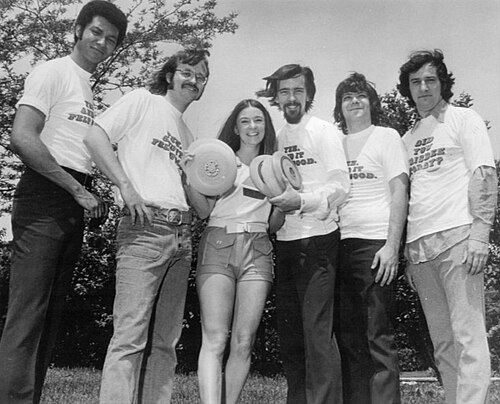
WLS ran on personality. Across its music years the station featured a run of famous DJs, from the frantic early rock and roll of Dick Biondi to the polished Bob Sirott. The biggest of them was Larry Lujack, the sardonic "Superjock" whose world-weary morning voice and "Animal Stories" segment made him a Chicago institution and a legend far beyond it.
Alongside him was John Records Landecker, whose evening show and audience-participation bits made him one of the most beloved voices on the station. These were not interchangeable announcers reading a playlist. They were stars with distinct personalities, and a huge part of why listeners felt loyal to WLS rather than just to the songs it played.
The night the music stopped
The thing that killed WLS as a music station was not a competitor. It was a frequency. Through the 1980s, Top 40 was steadily migrating from AM to FM, where the sound quality was far better for music. As listeners followed the hits to the FM dial, the great AM music giants ran out of road.
In June 1989 WLS announced it would go all-talk. Then, on August 23, 1989, at 7 p.m., the station simply stopped playing music. The last song was "Just You 'n' Me" by Chicago, a fitting goodbye, and WLS became a talk station, with Sally Jessy Raphael among its early hosts. A nearly three-decade run as one of America's great music stations was over.
The honest bottom line
The end of WLS as a music station was not a tragedy so much as a technology finally winning. AM radio simply could not compete with FM on sound quality, and no amount of nostalgia or 50,000 watts could change the physics of it. Clinging to Top 40 on AM into the 1990s would have been sentimental and doomed. But that does not make the loss any less real for the people who grew up on it. WLS was, for a huge chunk of the country, the station that brought the music in from far away, and when the music stopped, so did a particular way of feeling connected to the wider world. The signal still reaches. The magic moved to FM. Songs like Dancing in the Dark and Every Breath You Take reached the Midwest through that 50,000-watt AM signal before FM took the music away.
FAQ
What was WLS in Chicago? WLS was a major Top 40 radio station at 890 AM in Chicago, broadcasting with 50,000 watts of clear-channel signal that reached across the Midwest and much of the country at night.
Why could WLS be heard so far away? As a 50,000-watt clear-channel AM station, WLS had an enormous signal. At night, when AM waves skip off the atmosphere, it could be picked up hundreds of miles from Chicago.
Who were the famous WLS DJs? WLS featured legendary personalities including Dick Biondi, Larry Lujack, John Records Landecker, and Bob Sirott across its years as a music station.
When did WLS stop playing music? WLS stopped playing music on August 23, 1989, at 7 p.m., switching to a talk format. Its final song was "Just You 'n' Me" by Chicago.
Why did AM music stations like WLS die out? Top 40 music moved from AM to FM through the 1980s because FM offered far better sound quality. As listeners followed the hits to FM, AM music giants like WLS lost their audiences.
Station histories, archive-checked.
Part of 80s Radio. Read next: the famous DJs of the decade.