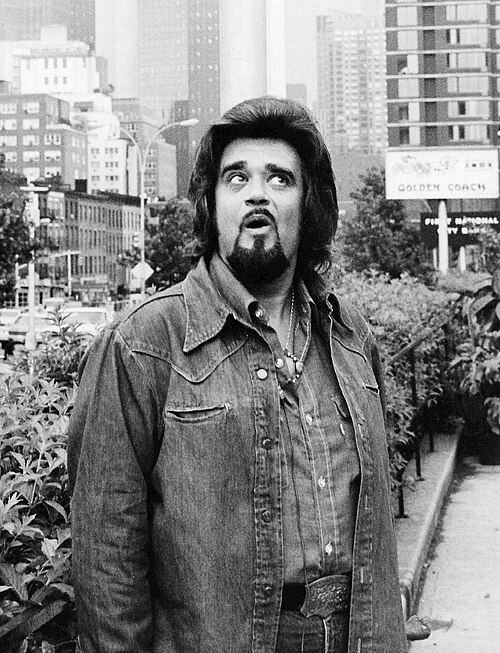
Before you ever saw his face, you knew the voice. A gravelly, howling, half-laughing growl that sounded like it was coming from somewhere illicit and far away, because for years it literally was. Wolfman Jack was the most mysterious voice in American radio, a DJ who broadcast rock and roll into the United States from across the Mexican border, and by the 1980s he had become something rare: a radio legend who outlasted the era that made him.
Wolfman Jack, whose real name was Robert Weston Smith, was an American disc jockey born in 1938 and famous for his raspy, howling voice. In the early 1960s he broadcast into the United States from powerful Mexican "border blaster" stations whose signals reached most of North America. He reached a new generation as himself in the 1973 film "American Graffiti" and as the announcer on NBC's "The Midnight Special," carrying his fame through the end of the 1970s and into the 1980s.
The voice from across the border
Wolfman Jack made his name doing something that would have been illegal inside the United States. In the early 1960s he broadcast from XERF, a station in Ciudad Acuña, Mexico, just across the border from Del Rio, Texas. These were "border blaster" stations, and they operated at power levels far beyond what American law allowed, in XERF's case a signal so strong it could be heard across most of North America at night.
That is how a teenager in the middle of the country could tune into the dark and find this wild, howling voice playing rhythm and blues and rock and roll that local stations would not touch. The distance and the mystery were part of the magic. Nobody knew what he looked like, where exactly he was, or even, for a long time, that he was not Black, since his voice and his music drew on Black radio traditions. He was a legend precisely because he was a rumor with a signal.
The face finally revealed
The mystery broke in 1973, when George Lucas cast Wolfman Jack as himself in "American Graffiti," the film that did more than anything to make the Wolfman a mainstream star. Lucas, who had grown up listening to him, gave him a small share of the film's profits, and when "American Graffiti" became an enormous hit, that share provided the Wolfman with a steady income for the rest of his life.
Suddenly the voice had a face and a following far beyond radio. He leaned into it, becoming the announcer and occasional host of NBC's late-night concert series "The Midnight Special," where he introduced the biggest acts in music to a national television audience until the show ended in 1981.
Carrying into the 80s
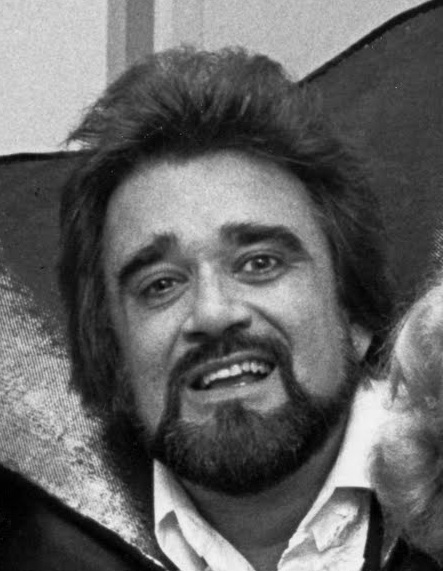
By the 1980s the Wolfman was less a working DJ than a living piece of rock and roll history. "The Midnight Special" had wrapped, and he spent the decade in syndication and personal appearances, the familiar howl trading on decades of goodwill. He was the voice your parents had listened to in the dark, still around, still growling, a direct link back to the first generation of rock radio.
He kept working almost to the end. Wolfman Jack died of a heart attack on July 1, 1995, at his home in North Carolina, having just returned from a promotional tour. The voice that had haunted the airwaves for over thirty years finally went quiet.
The honest bottom line
The Wolfman Jack of the 1980s was, in truth, coasting on a legend built two decades earlier. The border-blaster days were long gone, the mystery was solved, and much of his later fame rested on a movie role and the memory of what he had been. There is a version of this story where that reads as sad, a legend living off his own past. But it misses what he actually represented. Wolfman Jack was living proof that a voice on the radio could become mythology, could reach a kid across a thousand miles of darkness and change what that kid thought music could be. He earned the right to coast. He had already given radio one of its greatest characters. The decade that followed his peak gave the airwaves Purple Rain and Like a Virgin, songs that would have sounded even wilder growled through a border transmitter at two in the morning.
FAQ
Who was Wolfman Jack? Wolfman Jack, real name Robert Weston Smith, was an American disc jockey born in 1938, famous for his raspy howling voice and for broadcasting rock and roll into the U.S. from Mexican border-blaster stations.
What was a border blaster? A border blaster was a radio station just inside Mexico that broadcast at power levels far beyond U.S. legal limits. Wolfman Jack's station XERF could be heard across most of North America at night.
Was Wolfman Jack in American Graffiti? Yes. Wolfman Jack played himself in George Lucas's 1973 film "American Graffiti," which made him a mainstream star and gave him a share of the profits that supported him for life.
What was The Midnight Special? "The Midnight Special" was an NBC late-night concert television series. Wolfman Jack served as its announcer and occasional host until the show ended in 1981.
When did Wolfman Jack die? Wolfman Jack died of a heart attack on July 1, 1995, at his home in North Carolina, shortly after returning from a promotional tour.
A legend this big needs facts this solid.
Part of 80s Radio. Read next: the famous DJs everyone heard.