The last week of September, autumn locked in, and the radio playing the records that would soundtrack the whole run into the holidays. This is the week where the fall's biggest ballads planted their flags, some of them for a month at a time. Here is what was number one the week of September 28 in each year of the 1980s.
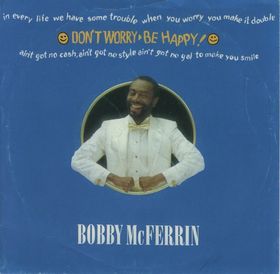
The number one song the week of September 28, 1988 was "Don't Worry, Be Happy" by Bobby McFerrin, the first entirely a cappella song ever to top the Billboard Hot 100, built from nothing but McFerrin's layered voice. It held the top across the last week of September that year. Across the decade this same week delivered some of the era's biggest fall ballads, from "Total Eclipse of the Heart" to "Didn't We Almost Have It All."
1980 to 1983
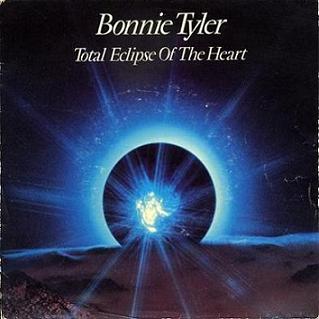
Diana Ross closed September 1980 at number one with "Upside Down," in the final week of its four-week run. In 1981 the week still held "Endless Love," Ross and Richie finally near the end of their nine-week reign. September 1982 belonged to the Steve Miller Band and "Abracadabra," which reclaimed number one after Chicago briefly interrupted it. And in 1983 the top went to Bonnie Tyler and "Total Eclipse of the Heart," the towering Jim Steinman production that would hold number one for four weeks.
1984 to 1986
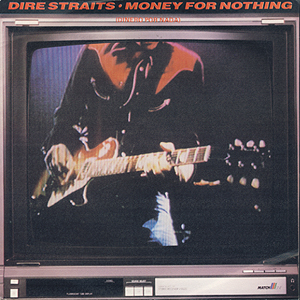
Prince and the Revolution ruled the last week of September 1984 with "Let's Go Crazy," the second number one pulled from "Purple Rain," proof that Prince could own the chart with more than one song from the same album that also topped the box office that summer. The week of September 28, 1985 belonged to Dire Straits and "Money for Nothing," in the last stretch of its three-week run, its groundbreaking computer-animated video a fixture on the very channel the song mocked.
 And in 1986 Huey Lewis and the News held the week with "Stuck with You," deep into a three-week reign and the band's second number one.
1987 to 1989
Whitney Houston ruled the last week of September 1987 with "Didn't We Almost Have It All," part of a record-setting streak of seven straight number ones across her first two albums. In 1988 the top went to Bobby McFerrin and "Don't Worry, Be Happy," the a cappella phenomenon that became the country's unlikely anthem and won the Grammy for both Record of the Year and Song of the Year. And in 1989 the week belonged to Milli Vanilli and "Girl I'm Gonna Miss You," a chart-topper from an act soon to be exposed as a studio front that never sang on its own records.
The honest bottom line
Late September rewards the epic. "Total Eclipse of the Heart" ran four weeks, Whitney and Prince stacked album cuts into multiple number ones, and even the outlier "Don't Worry, Be Happy" was an oversized idea done to the hilt. This is not the week of the quick radio hit. It is the week of the statement record, the ballad or the stunt built to dominate the fall. Radio in the 1980s made room for all of it, and the last week of September is where those big swings landed hardest.
FAQ
What song was number one on September 28, 1988? "Don't Worry, Be Happy" by Bobby McFerrin, the first entirely a cappella song to reach number one on the Billboard Hot 100.
How long was Total Eclipse of the Heart number one? "Total Eclipse of the Heart" by Bonnie Tyler, written and produced by Jim Steinman, held number one for four weeks starting the week of October 1, 1983.
How many number ones came from Purple Rain? Prince scored two number ones from "Purple Rain," "When Doves Cry" and "Let's Go Crazy," the latter topping the chart in late September 1984.
What Whitney Houston song was number one in September 1987? "Didn't We Almost Have It All," which reached number one the week of September 26, 1987, one of the string of chart-toppers from her second album.
Was Don't Worry Be Happy really all voice? Yes. Every sound on "Don't Worry, Be Happy," including the percussion and bass, is Bobby McFerrin's own voice, multi-tracked, with no instruments at all.
When did Total Eclipse of the Heart hit number one? "Total Eclipse of the Heart" by Bonnie Tyler reached number one the week of October 1, 1983, and held the top for four weeks.
The month ends, the standard holds.
Part of This Week in 80s Music. Last stop on this stretch: the week of October 5.