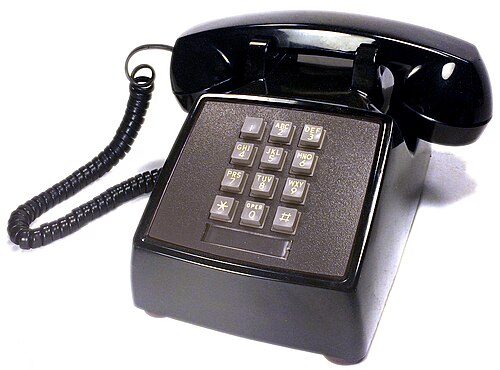
The phone was on the wall in the kitchen, and you had the station's number memorized. You dialed, got a busy signal, hung up, dialed again. Busy. Again. Busy. For twenty minutes you attacked that number, because tonight the DJ was taking requests, and you had a song you needed to hear and maybe a name you wanted said out loud on the radio. When you finally got through, your heart was pounding.
Calling the radio station to request a song meant phoning the station's request line, usually during a dedicated request show at night, and asking the DJ to play a specific song, often with a dedication to someone. In the 1980s, before you could play any song yourself, this was how you made the radio play what you wanted. The lines were almost always busy, and getting through felt like winning something.
How the request line worked
Most stations ran the request line hardest at night. During the day the format was too tight and too fast to take many calls, but after dark the pace loosened, and stations would run request-and-dedication shows built entirely around listener calls. You dialed in, told the DJ or the person answering the phones what you wanted to hear, and often who you wanted to dedicate it to.
The busy signal was the whole experience. A popular station had a handful of phone lines and thousands of people dialing, so getting through was a genuine contest of persistence and luck. You redialed over and over, sometimes for a solid hour, and each busy signal made actually connecting feel like more of a prize.
The dedication was the real point
Requesting the song was only half of it. The other half was the dedication. You would ask the DJ to play the song "for Jennifer" or "from someone who's thinking about you," and then you would sit by the radio and wait, sometimes for an hour, to hear it happen. When the DJ finally read your dedication and dropped the needle on your song, it was electric. Your private feeling had just been broadcast to the whole listening area.
For teenagers especially, the dedication was a weapon and a confession. You could tell someone how you felt without saying it to their face, hidden inside a song request on the radio, hoping they happened to be listening at exactly the right moment. Whole romances ran on this. So did whole heartbreaks.
Waiting to hear it happen
The wait was its own ritual. Once you got through and made your request, you could not leave the radio. You kept it on, low, listening for the DJ to come back and say your dedication, terrified you would miss it if you stepped away. When it came, you turned it up. When it did not, you wondered if the DJ had forgotten you, or run out of time, or simply passed you over.
That uncertainty is gone now, and something was lost with it. You could not guarantee your song would play, could not scroll to it, could not skip the wait. You had to earn it with a busy signal and an hour of patience, and then hope.
The honest bottom line
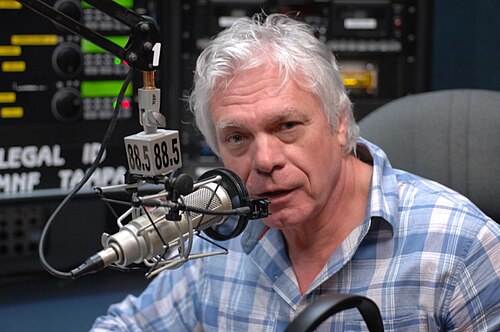
Here is the part the memory tends to soften: your request usually did not change much. Top 40 stations ran on tightly controlled playlists, and a lot of the time the DJ could only play songs that were already in rotation, so your "request" was really just nudging the timing of a song the station was going to play anyway. Off-list requests often got a polite no. But that does not diminish what it felt like. The point was never really control over the playlist. The point was the connection, the sense that a real person on the other end of that busy signal heard you, said your name, and sent your song out into the night. You cannot get a busy signal to feel that way anymore. When Don't Stop Believin' came on because you called and asked for it, the fact that the DJ was going to play it anyway did not matter at all.
FAQ
How did radio request lines work in the 80s? You called the station's request line, usually during a nighttime request show, and asked the DJ to play a specific song, often with a dedication. The DJ would work requests into the show.
Why was the radio request line always busy? Stations had only a few phone lines but thousands of listeners dialing at once, so getting through took persistence and luck, and the busy signal was a near-constant part of the experience.
What was a radio dedication? A dedication was a personal message attached to a song request, such as playing a song "for" or "from" a specific person, read aloud by the DJ before the song played.
Could you request any song you wanted? Not always. Stations ran tight playlists, so DJs often could only play songs already in rotation, and off-list requests were frequently declined.
When were request shows on? Request-and-dedication shows most often ran at night, when the station's pace loosened enough for the DJ to take listener calls and read dedications on the air.
We dialed those request lines ourselves, true story.
Part of 80s Radio. Read next: taping songs off the radio.