Somewhere in America in 1982, a phone rang, and a stranger asked for Jenny. Then it rang again. It kept ringing, in house after house, for anyone unlucky enough to hold the seven digits a rock band had just set to a hook you could not shake. You heard the song once and the number lived in your head forever, which was exactly the problem for the real people who owned it.
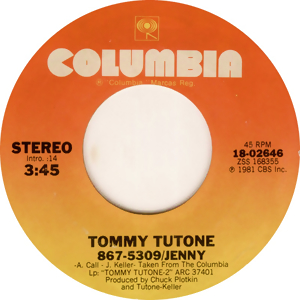
"867-5309/Jenny" was a 1982 hit by Tommy Tutone that reached number four on the Billboard Hot 100 that May. It was written by Alex Call and Jim Keller. Despite years of colorful legends about a number scrawled on a bathroom wall, songwriter Alex Call has said he simply invented both the name and the number while sitting in his backyard. There was no real Jenny.
The number that got into everyone's head
The genius of the song is the hook, and the hook is a phone number. Songwriters spend careers trying to write something people cannot forget, and Alex Call and Jim Keller did it by accident with seven digits and a woman's name. The melody drills the number in so hard that people who were not born in 1982 can still recite it. That is a rare kind of songcraft, even when the song around it is a straightforward power-pop single.
Tommy Tutone was a real band, named after frontman Tommy Heath, not a solo act, which trips up almost everyone. They had charted before with a smaller hit, but this was the one that broke, climbing to number four in the spring of 1982 and then defining them forever.
The bathroom-wall legend, and the truth
For decades the origin story kept mutating. Guitarist Jim Keller told People in 1982 that Jenny was a real girl whose name and number turned up on a men's room wall. Other versions placed the number on different walls in different towns. It made a great story, and stories like that travel faster than facts.
The less glamorous version is the true one. Alex Call eventually admitted he wrote the song in his backyard with no Jenny, no bathroom, and no source number. He needed a good phrase to sing, "Jenny" scanned well, and the digits followed. The whole cultural earthquake grew out of a hook a man made up alone in his yard.
The prank calls that punished real strangers
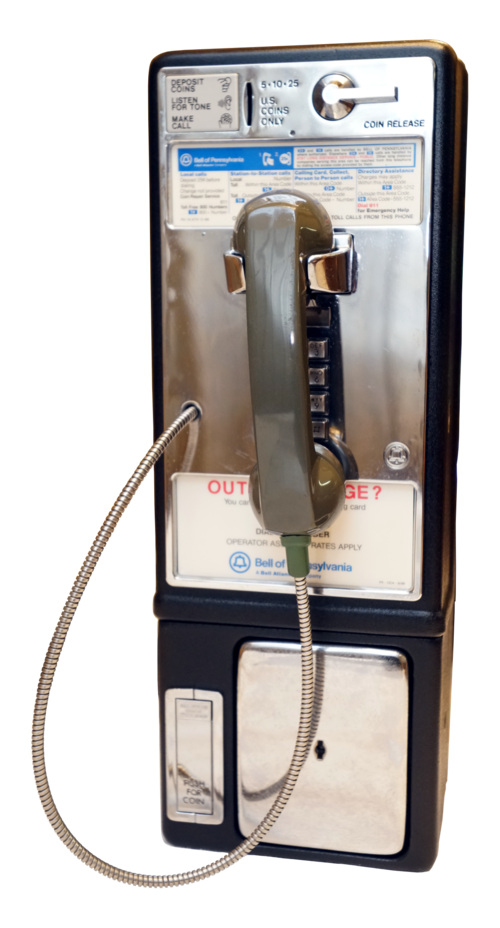
Here is where a catchy song became a small national menace. Once the record hit radio, people across the country started dialing 867-5309 in their own area codes and asking for Jenny. Anyone who happened to hold that number got buried. One resident in Alabama changed her number in 1982 to escape it. A family in the Akron, Ohio area could not get the calls traced, because as the phone company admitted, the calls were coming from everywhere at once.
The song had no malice in it, but it weaponized a real string of digits in every area code in the country. For a while, 867-5309 was the most dangerous phone number in America, not because of what it connected to, but because of what it made total strangers do.
The honest bottom line
Stripped of the number, this is a competent early-80s power-pop single and not much more, the kind of song that would be a forgotten album cut without its gimmick. It is a novelty, and novelty is usually a short shelf life. But the hook is so perfectly engineered that it outlived the band, the decade, and even the people it tormented, and businesses still fight to own the number today. Sometimes a great trick beats a great song, and this one has lasted forty years. That same year, Soft Cell proved the opposite with Tainted Love, a song that survived not on a gimmick but because the craft underneath it was real, and the distance between the two says something about what radio could do in 1982.
FAQ
Is 867-5309 a real phone number? It is a real, dialable seven-digit number in every area code, which is exactly why the song caused so much trouble. But songwriter Alex Call has said he invented it out of thin air rather than copying it from anywhere.
What does 867-5309 mean? It has no hidden meaning. It is just the phone number of a fictional girl named Jenny, chosen because the digits and the name fit the melody. The "meaning" people remember is simply how unforgettable the hook is.
Who sang "867-5309/Jenny"? The band Tommy Tutone, fronted by Tommy Heath. It is a band name, not a single performer, which surprises most people.
How high did the song chart? It peaked at number four on the Billboard Hot 100 on the chart dated May 22, 1982, the biggest hit of the band's career.
Did people really prank call the number? Yes. After the song hit, people nationwide dialed 867-5309 in their local area codes asking for Jenny, and real residents who held the number were flooded with calls, with some forced to change their numbers.
Was there a real Jenny? No. Alex Call has said he made up both the name and the number in his backyard. The bathroom-wall origin stories that circulated for years are not the true account.
Part of our guide to 80s One-Hit Wonders. See also Video Killed the Radio Star.
The number is fake, the people behind this site are not.