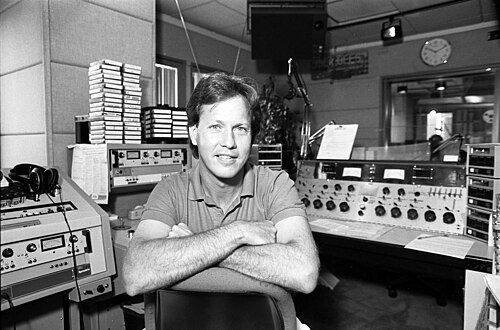
For most of the 1970s, if you wanted a weekly countdown of the nation's hits, there was one choice, and his name was Casey Kasem. Then in 1983 a second voice muscled in, brasher and sillier and coming out of Los Angeles, and suddenly the Sunday countdown was a two-man race. That challenger was Rick Dees, and his "Weekly Top 40" turned the sober national countdown into a genuine competition.
The "Rick Dees Weekly Top 40" was a syndicated radio countdown show that debuted in September 1983, created to rival Casey Kasem's "American Top 40." Hosted by Los Angeles morning star Rick Dees, it counted down the nation's hits with a looser, goofier style built on sound effects and comedy bits. It started on just 10 stations and grew explosively, reaching hundreds of stations within a couple of years.
Why it started
The show was born out of a radio business dispute. Rick Dees was already the dominant morning host at KIIS-FM in Los Angeles, and his station had carried Casey Kasem's "American Top 40." When KIIS lost the rights to "American Top 40" to a rival station over a disagreement about airing network commercials, the door opened for Dees to launch a countdown of his own.
So in September 1983, the "Rick Dees Weekly Top 40" went on the air, syndicated by United Stations. It counted down essentially the same national hits as Kasem's show, but the host could not have been more different, and that difference was the whole pitch.
A different kind of countdown
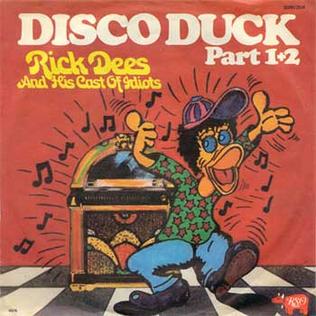
Where Casey Kasem was warm, measured, and sincere, full of researched trivia and heartfelt dedications, Rick Dees was a comedian at heart. He had already scored a novelty number one in 1976 with "Disco Duck," and he brought that same sensibility to the countdown. His show leaned on goofy sound effects, silly character voices, and comedy bits, often dropped in right before the commercial breaks.
That made the two countdowns a real choice rather than a copy. If you wanted the stately, emotional version of the Sunday countdown, you tuned to Kasem. If you wanted it faster and funnier, with a host who was clearly in on the joke, you went to Dees. Same songs, opposite personalities.
The explosive growth
The Dees countdown grew fast. It launched on just 10 stations, but by the end of 1983 it was on 40. By the end of 1984 it had reached 275 stations across the United States, and it kept climbing from there. In the span of about two years, Rick Dees went from a challenger with a handful of affiliates to a genuine national rival carried on hundreds of stations.
That growth made the mid-1980s the era of the countdown war, with two big syndicated shows competing for the same Sunday audience. It was good for listeners, who now had options, and it confirmed Dees as one of the biggest names in American radio, a star both in his Los Angeles morning slot and coast to coast on the weekend.
The honest bottom line
Underneath the comedy, the "Rick Dees Weekly Top 40" was counting down the exact same Billboard-driven chart as its rival, so the actual musical content was nearly identical. What Dees sold was not different songs but a different attitude, and some listeners found the sound effects and shtick grating rather than fun. It was, in a sense, a countdown competing on personality alone. But that turned out to be enough, because the countdown was always partly about the host, and Dees offered a real alternative to Kasem's earnestness. Giving people a choice between two strong personalities reading the same chart was a smart bet, and the hundreds of stations that signed on proved it paid off. When a song like Billie Jean hit number one, Dees could make the announcement sound like a party, while Kasem made it sound like history, and neither was wrong.
FAQ
What was the Rick Dees Weekly Top 40? It was a syndicated radio countdown show that debuted in September 1983, hosted by Rick Dees, counting down the nation's hits with a comedic, sound-effect-heavy style.
When did the Rick Dees Weekly Top 40 start? The show debuted in September 1983, after Dees's station KIIS-FM lost the rights to carry "American Top 40."
How was Rick Dees different from Casey Kasem? Casey Kasem's "American Top 40" was warm, sincere, and trivia-driven, while Rick Dees was comedic, using goofy sound effects and character voices. They counted down the same hits with opposite personalities.
How big did the Rick Dees countdown get? It launched on 10 stations, grew to 40 by the end of 1983, and reached 275 stations by the end of 1984, becoming a major national rival to "American Top 40."
Who is Rick Dees? Rick Dees was the dominant morning host at KIIS-FM in Los Angeles and the host of the "Weekly Top 40." He had earlier recorded the 1976 novelty number one "Disco Duck."
Countdown rivalries get the neutral telling, our standard.
Part of 80s Radio. Read next: American Top 40 and Casey Kasem.