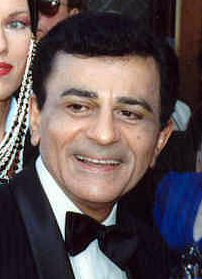
Sunday morning, a transistor radio on the kitchen counter, and a warm, unhurried voice counting backward from 40 to 1. For millions of people who grew up in the 1980s, that voice belonged to Casey Kasem, and the show was "American Top 40." It was appointment radio before anyone used the phrase, the weekly ritual that told you exactly where your favorite song stood in the whole country.
Casey Kasem hosted "American Top 40" throughout the 1980s until he left the show in 1988. The program counted down the 40 biggest songs on the Billboard Hot 100 each week, running four hours long after expanding from three hours in October 1978. Kasem's blend of chart facts, listener stories, and his closing line, "keep your feet on the ground, and keep reaching for the stars," made it the most listened-to countdown in American radio.
Where the countdown came from
"American Top 40" premiered on July 4, 1970, created by Casey Kasem along with Don Bustany, Tom Rounds, and Ron Jacobs. The idea was simple and, at the time, untested: take the Billboard Hot 100, the national record of what America was actually buying and hearing, and count the top 40 down in order, every week, on the radio. It started on a handful of stations. By the 1980s it was carried on hundreds around the world, the closest thing pop music had to a weekly national town square.
The show ran three hours at first. On October 7, 1978, it expanded to four, giving Kasem room to stretch out the stories between the songs. That extra hour mattered more than it sounds. The countdown was never only about the music. It was about the telling.
What made Casey Kasem different
Plenty of DJs could read a chart. What set Kasem apart was the way he wrapped each song in something you did not know. He would tell you which artist had the longest gap between number ones, which one-hit wonder was driving a cab now, how a B-side accidentally became a smash. The trivia was researched, specific, and delivered in that unmistakable voice, warm without being syrupy, informed without showing off.
Then there was the pacing. Kasem understood that a countdown is a story with a built-in ending. Every week the audience knew there was a number one coming, and he made you wait for it, teasing the top of the chart, building the suspense across four hours until the biggest song in the country finally played. He turned a list into a narrative, and he did it 52 weeks a year.
The Long Distance Dedication
The segment that made grown adults cry in their cars started the weekend of August 26, 1978. A listener wrote in asking Kasem to play a song for his girlfriend, who was moving to West Germany. Kasem read the letter on the air, played the song, and something clicked. The Long Distance Dedication became a permanent fixture: a real letter from a real listener, a story of distance or loss or longing, and a song chosen to carry the weight of it.
By the 1980s the dedications were the emotional center of the show. They were the moment the countdown stopped being about chart positions and became about people. You did not know these listeners, but for three minutes their heartbreak was yours, and Kasem read every letter like it was the only one that mattered.
When Casey left
Kasem hosted "American Top 40" straight through the decade until 1988, when he left the show. Shadoe Stevens took over as host on August 13, 1988, and carried the countdown until early 1995. Kasem went on to host other countdown programs of his own, and years later, in 1998, he returned to the "American Top 40" name and hosted it again into the next decade.
For a certain generation, though, there is only one American Top 40, and it is the one from those Sunday mornings, with Kasem at the microphone and 40 songs standing between you and the number one record in America.
The honest bottom line
The countdown was, at its core, a repackaging of a chart anyone could look up in Billboard. Kasem was not choosing the songs. He was reading a list the record-buying public had already made. And four hours is a long time to stretch 40 songs, padded with trivia and dedications and long teases toward the top. But that is exactly why it worked. Kasem understood that the songs were the reason people tuned in and the stories were the reason they stayed. The affection survives because he treated a mechanical chart with genuine care, and made a country of listeners feel like they were counting down together. A song like Don't Stop Believin' reached most of America through a countdown like this, and the reason it survived is that Kasem treated a chart number like a story.
FAQ
Who hosted American Top 40 in the 80s? Casey Kasem hosted "American Top 40" through the 1980s until he left in 1988. Shadoe Stevens then took over as host starting August 13, 1988.
How long was American Top 40? The show ran four hours each week during the 1980s, having expanded from its original three-hour format on October 7, 1978.
When did Casey Kasem leave American Top 40? Casey Kasem left "American Top 40" in 1988. He later returned to host the show again from 1998 to 2004.
What was Casey Kasem's famous sign-off? "Keep your feet on the ground, and keep reaching for the stars," which he delivered at the close of every countdown.
When did American Top 40 start? "American Top 40" premiered on July 4, 1970, created by Casey Kasem, Don Bustany, Tom Rounds, and Ron Jacobs.
What chart did American Top 40 count down? The show counted down the top 40 songs on the Billboard Hot 100, the national chart of the best-selling and most-played singles in the United States each week.
Countdown history gets counted carefully, our rules.
Part of 80s Radio. Read next: the Long Distance Dedication.