You had a blank tape in the deck, the radio on, and a specific song you were waiting for. Maybe you had been waiting for days. And when the opening notes finally came, you lunged for the record button, praying the DJ would shut up long enough to let you get a clean copy. This was how a whole generation built its music collection: one ambush at a time, off the radio, for free.
Taping songs off the radio meant recording music onto a blank cassette straight from a radio broadcast, usually by waiting for a specific song to play and hitting record the moment it started. In the 1980s, before you could buy any song on demand, it was the cheapest way to own the music you loved. The catch was that you were at the mercy of the DJ, the station, and pure timing, so the recordings were never quite perfect.
Why we did it
Records and cassettes cost money, and if you only wanted one or two songs off an album, buying the whole thing felt like a waste. The radio, meanwhile, played the hits over and over for free. So you turned the radio into your record store. You kept a blank tape loaded and ready, and when the song you wanted came on, you captured it.
For kids especially, this was the only way to build a collection. An allowance did not stretch to a shelf of albums, but a three-pack of blank cassettes did. The radio was the source, the cassette was the storage, and your patience was the only real cost.
The art of the ambush
Doing it well was a skill. You had to know the station's habits, which hits it played most, roughly when, so you could be near the radio at the right time. You kept the tape cued up and the deck in pause-record, so all you had to do was release the pause button the instant the song began.
Then came the enemy: the DJ. Radio personalities loved to talk over the instrumental intro of a song, right up until the vocals started, and they loved to start talking again before the last note faded. That meant half your recordings had a voice smeared across the beginning or the end. Getting a clean copy, with no DJ, no station jingle, no fade into a commercial, was a small triumph you could actually feel. And when the DJ talked all over your song, the betrayal was real.
The mixtape was the payoff
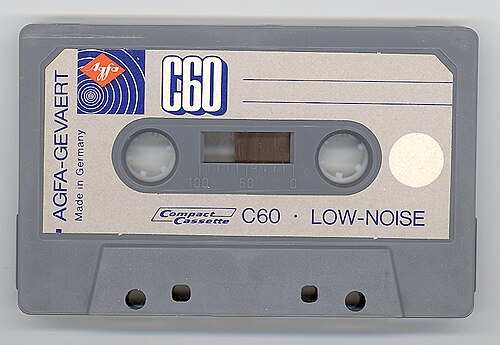
Once you had a stack of songs captured off the air, the next move was the mixtape. You would record song after song onto one cassette, building a sequence, agonizing over the order, trying to time it so a track did not get cut off when the tape ran out on one side. A mixtape made this way was a genuine artifact of effort. Every song on it had been hunted, captured, and arranged by hand.
That is why the mixtape meant so much, especially when you made one for someone else. It was not a playlist you assembled in thirty seconds. It was hours of sitting by the radio, waiting, recording, cursing the DJ, and doing it again, all so the right songs would land in the right order for one specific person.
The honest bottom line
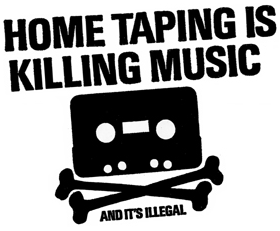
The music industry hated this, and it was not shy about saying so. In October 1981 the British Phonographic Industry launched its "Home Taping Is Killing Music" campaign, complete with a logo of a skull and crossbones made from a cassette and the added line "And It's Illegal." Bands mocked it, the Dead Kennedys most memorably, and the sales apocalypse the industry predicted never really arrived. But strip away the nostalgia and the truth is plain: the recordings were low quality, chopped up by DJs, and yes, technically theft. None of that is why people remember it fondly. They remember it because the effort was the point. When a song costs you nothing but time and patience, you end up valuing it in a way that a one-click download can never quite match.
FAQ
Why did people record songs off the radio in the 80s? It was the cheapest way to own specific songs before on-demand music existed. Instead of buying whole albums, listeners captured individual hits onto blank cassettes straight from the radio.
How did you tape a song off the radio? You loaded a blank cassette, set the deck to pause-record, waited for the song to start, and released pause to begin recording. The goal was a clean copy without the DJ talking over it.
Why did the DJ always ruin the recording? DJs routinely talked over the intros and outros of songs, so home recordings often had a voice smeared across the start or end, making a clean capture surprisingly hard to get.
Was taping off the radio illegal? The music industry treated it as copyright infringement, and the 1981 "Home Taping Is Killing Music" campaign called it illegal. In practice it was widespread and rarely enforced against individuals.
What was a mixtape? A mixtape was a cassette filled with a hand-picked sequence of songs, often recorded off the radio or from records, arranged in a deliberate order and frequently made as a gift.
We held that pause button ourselves, both of us.
Part of 80s Radio. Read next: calling the station on the request line.