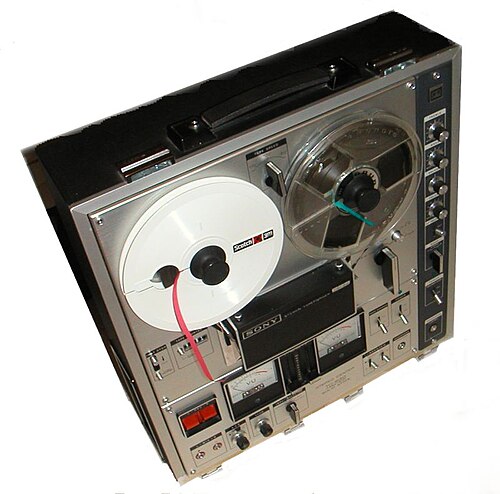
Radio is the medium that vanishes as it happens. A song plays, a DJ talks, a jingle sweeps by, and then it is gone, out into the air and never repeated exactly the same way. Except sometimes someone was recording. Those recordings are called airchecks, and they are very nearly the only way we can still hear what a station actually sounded like on an ordinary afternoon in 1985.
An aircheck is a recording of a radio broadcast, capturing a DJ's on-air performance along with the songs, jingles, and commercials as they aired. DJs originally made them as demo tapes to show off their skills when applying for jobs, and stations kept them for archives. Today airchecks are the primary surviving record of how radio really sounded, treasured by collectors and historians.
Why DJs recorded themselves
The original purpose was practical: a DJ needed a demo. If you wanted a better job at a bigger station in a bigger city, you had to prove you could do the work, and the only proof was a tape of you doing it. So a DJ would hit record when the microphone went live and stop when it went off, collecting the best bits of their own show to send around as a calling card.
This habit goes back much further than the 1980s. One of the oldest known surviving airchecks is a 15-minute segment of a 1931 broadcast on the Los Angeles station KHJ featuring a young Bing Crosby. For decades, ambitious announcers built careers on the strength of a well-edited aircheck.
Scoped versus unscoped
There are two kinds, and the difference matters a lot to collectors. A "scoped" aircheck, short for telescoped, keeps only the parts where the announcer is talking, with just a sliver of the song or commercial on either side. It was the efficient format for a job demo, since a program director wanted to hear the DJ, not sit through every full song.
An "unscoped" aircheck leaves everything intact: the complete songs, the commercials, the news, the jingles, the whole broadcast exactly as it went out. For a job hunt, unscoped was a waste of tape. For history, it is priceless. An unscoped aircheck is a time capsule, the actual texture of a station on a specific day, ads and all.
Why they matter now
Airchecks are how radio's own history survived. Because the broadcast itself disappeared into the air, the tape a DJ happened to make is often the only evidence that a particular show, a particular voice, or a particular sound ever existed. Collectors trade them, archives preserve them, and fans use them to relive the exact stations of their youth.
They also carry a kind of authenticity nothing else does. A station can tell you it was the most exciting sound in town, but an unscoped aircheck simply proves it, or does not. You hear the energy, the tightness, the jingles landing in the right spots, the DJ riding the intro of a song without stepping on the vocals. It is the real thing, unedited, still playing.
The honest bottom line
Most airchecks were never meant to be historical documents. They were job applications, made by DJs promoting themselves, which means the scoped ones are curated highlight reels, the flattering version of a show rather than the whole truth. And the sound quality, tape hiss and all, is often rough. But that is also what makes them trustworthy. Nobody was performing for posterity. They were just capturing a normal shift, and normal is exactly what got lost everywhere else. An aircheck is the closest thing we have to standing in a room with the radio on, decades after the signal faded. Hearing a DJ back-announce In the Air Tonight on a cassette from 1981 tells you something about the song that no streaming algorithm can replicate.
FAQ
What is an aircheck? An aircheck is a recording of a radio broadcast that captures the DJ's on-air work along with the songs, jingles, and commercials as they aired.
Why did DJs make airchecks? DJs made them mainly as demo tapes, edited highlights of their on-air performance used to apply for jobs at other stations. Stations also kept airchecks for archives.
What is the difference between scoped and unscoped airchecks? A scoped aircheck keeps only the parts where the announcer is talking, with a bit of music on either side. An unscoped aircheck leaves the entire broadcast intact, including full songs and commercials.
Why are airchecks important today? Because radio broadcasts otherwise disappear as they air, airchecks are often the only surviving record of how a station, show, or DJ actually sounded, making them valuable to collectors and historians.
How old is the practice of airchecking? It goes back to at least the early 1930s. One of the oldest known surviving airchecks is a 1931 broadcast on the Los Angeles station KHJ featuring Bing Crosby.
Airchecks are evidence, and we treat evidence right.
Part of 80s Radio. Read next: 80s radio jingles.